


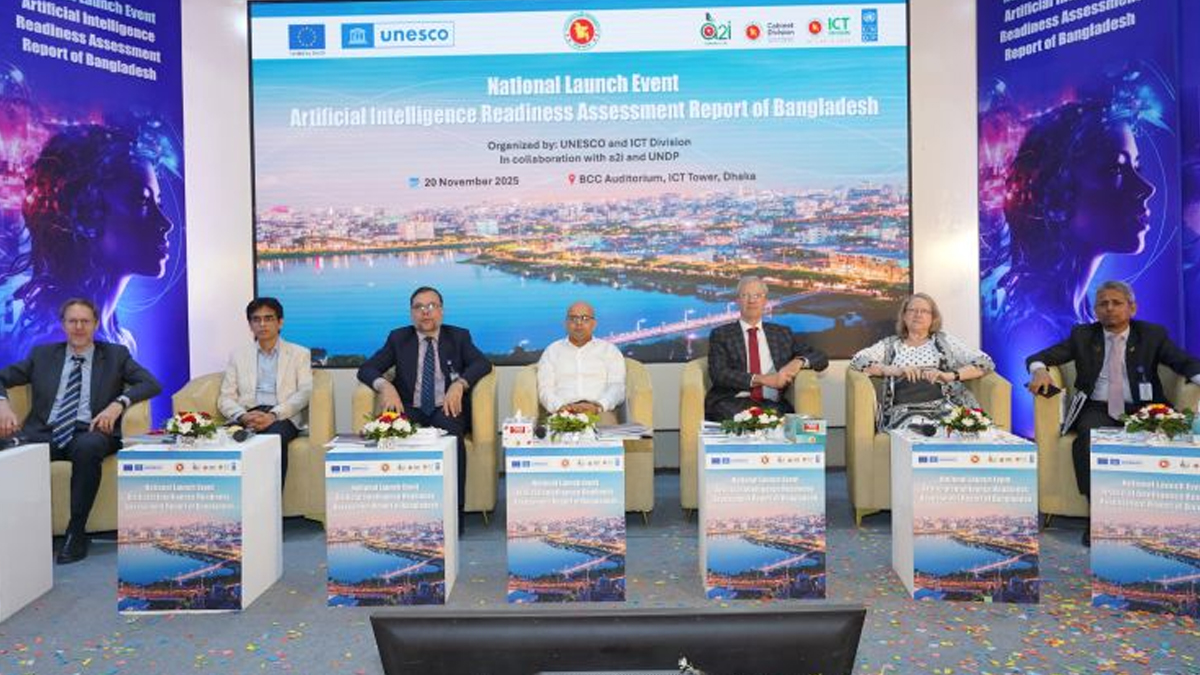
The United Nations Educational, Scientific and Cultural Organization (UNESCO) and the Bangladeshi government have jointly launched the National AI Readiness Assessment Report. This comprehensive study, conducted under UNESCO’s Recommendation on the Ethics of Artificial Intelligence, evaluates the country’s current institutional, technical, and social preparedness for the widespread adoption and governance of AI technologies. The assessment is crucial for Bangladesh as it seeks to integrate AI into its national economic and digital transformation strategies.
The report identifies several key challenges and gaps that need urgent attention to unlock the nation’s AI potential. Foremost among these are issues related to fundamental digital infrastructure, specifically weak internet connectivity in rural areas and a critical lack of high-end compute capacity required for training and deploying large AI models. The report also highlights a significant digital-skills gap within the workforce, particularly the shortage of specialized data scientists and AI engineers needed to drive innovation.
By completing this assessment, Bangladesh signals its commitment to adopting a responsible and rights-based approach to AI governance, ensuring that the technology is implemented ethically and inclusively. The findings provide a clear roadmap for policymakers to strategically target investment in infrastructure and education, ensuring AI adoption supports equitable development rather than widening existing social and economic divides.









 and the Bangladeshi government have jointly launched the National AI Readiness Assessment Report.)