

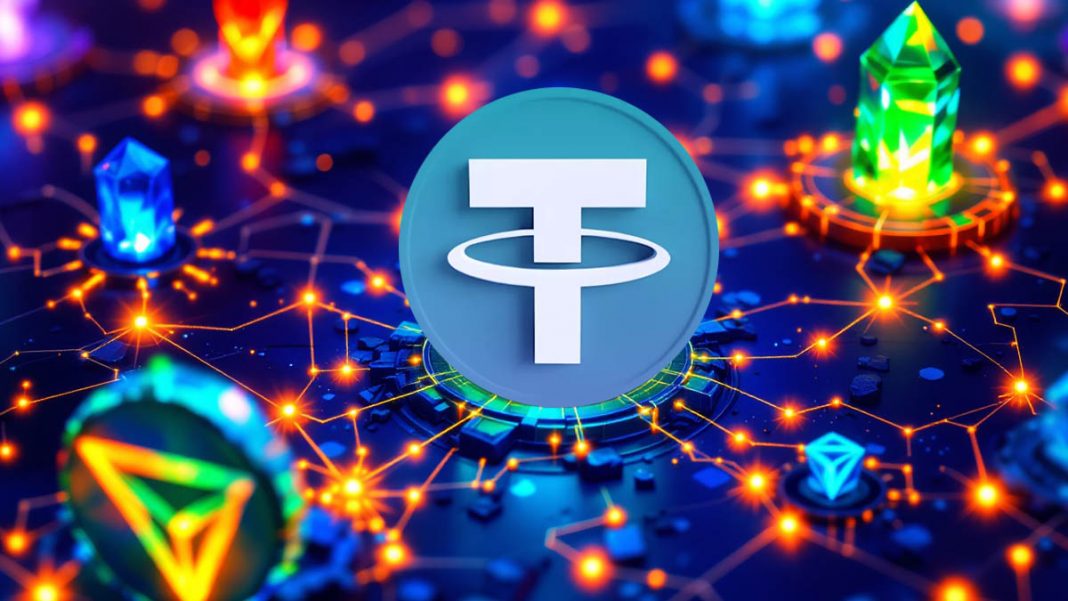
Tether, the world’s leading stablecoin issuer, has announced a major policy shift by reversing its earlier decision to freeze USDT tokens on five so-called “legacy” blockchains. The blockchains in question include Omni Layer, Bitcoin Cash SLP, Kusama, EOS, and Algorand. This move comes after months of uncertainty for users and businesses operating on these networks, highlighting the company’s responsiveness to community feedback.
Originally, Tether had outlined plans to phase out support by halting new token issuance on these chains in 2024, while still allowing redemptions until September 1, 2025. Any remaining tokens beyond that deadline were expected to be frozen permanently. However, following input from blockchain communities, Tether has now confirmed that it will not be moving forward with smart contract freezes on these networks.
Instead, users will continue to transact with USDT tokens that already exist on these blockchains. The company emphasized, however, that this does not mean new development or official support will return. No new USDT will be issued on these platforms, but existing assets remain operational. For users, this provides greater flexibility in managing legacy holdings while avoiding a hard cutoff.
The decision aligns with Tether’s broader corporate strategy. The company has repeatedly stressed that its future focus lies on ecosystems that demonstrate scalability, active developer engagement, and robust user demand. This approach ensures Tether’s resources are allocated to blockchains where innovation and liquidity are strongest, while still recognizing the importance of legacy communities.
Current circulation data shows that on the Omni Layer, approximately 82.9 million USDT remain in circulation, while EOS hosts 4.2 million. Bitcoin Cash SLP and Algorand each hold around 1 million and 0.8 million respectively, and Kusama maintains 0.2 million USDT. Although these figures represent only a fraction of Tether’s total issuance, they are still significant to the communities relying on them.
Globally, the scale of Tether’s operations continues to expand. The total market supply of USDT now exceeds 167.5 billion tokens, with Ethereum and TRON dominating issuance at 83.3 billion and 79.6 billion USDT respectively. These two ecosystems remain Tether’s primary strongholds due to their scalability and adoption rates.
In August, Tether also revealed support for USDT on the RGB protocol, a new Bitcoin-based digital asset issuance framework. This step further emphasizes the company’s intent to prioritize next-generation blockchain solutions while leaving room for community-driven adjustments, as demonstrated in the latest reversal.
Conclusion:
Tether’s decision to keep legacy USDT tokens active while halting new issuance reflects a pragmatic balance between forward-looking growth and user trust. By avoiding forced freezes, Tether has preserved liquidity for communities that still rely on these blockchains, while reaffirming its commitment to ecosystems with the greatest long-term potential. This marks another example of the stablecoin giant navigating the complex intersection of innovation, adoption, and decentralization.