


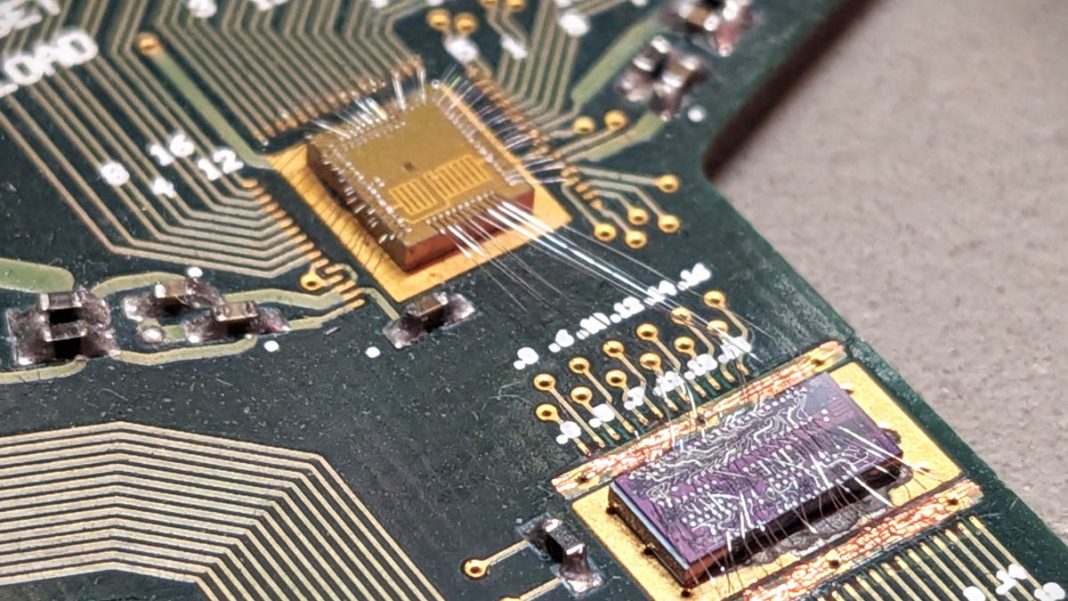
Artificial intelligence has become deeply embedded in our daily lives, but its rapid growth has created a challenge: the demand for power and computational capacity is outpacing what traditional computers can deliver. Training large, complex AI models requires immense resources, leading to skyrocketing energy consumption and putting pressure on global data centers. To tackle this, researchers are turning to an innovative solution: physical neural networks that leverage the properties of light to perform calculations.
A recent study published in Nature showcases the groundbreaking work of an international consortium that includes the Politecnico di Milano, École Polytechnique Fédérale de Lausanne, Stanford University, the University of Cambridge, and the Max Planck Institute. Their focus? Using photonic chips to build and train neural networks with unprecedented efficiency. Unlike conventional AI systems that rely on digital computations, these analog circuits harness physical phenomena—such as light interference on silicon microchips—to perform complex mathematical operations like sums and multiplications.
Why Photonic Chips Matter
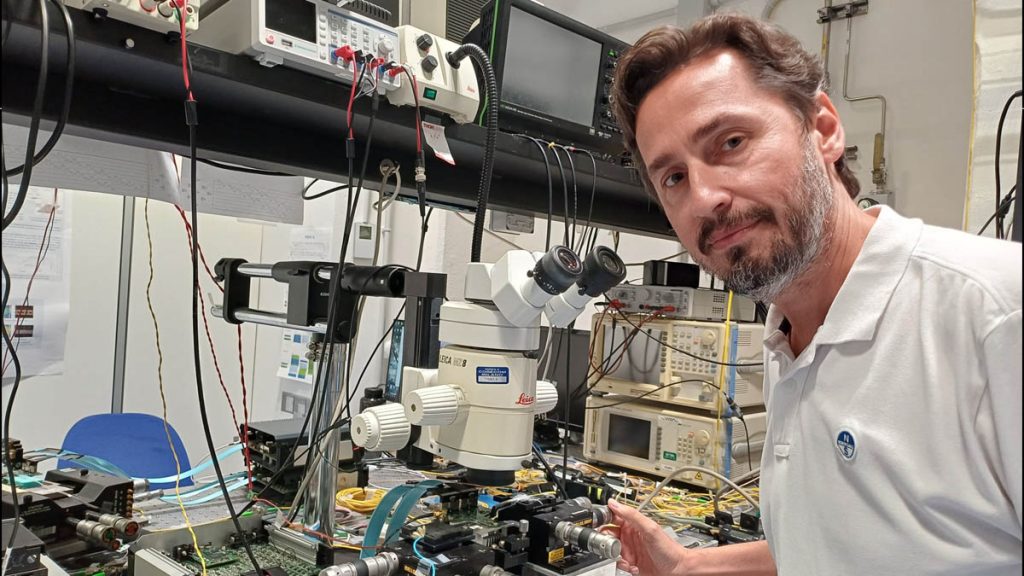
Traditional digital processors waste significant energy converting information back and forth between analog and digital signals. Photonic chips, however, bypass this step entirely by processing information directly through light. According to Professor Francesco Morichetti, head of the Photonic Devices Lab at Politecnico di Milano, these chips enable calculations with a dramatic reduction in both energy consumption and processing time. This is a crucial advancement toward creating sustainable AI systems that minimize the carbon footprint of modern data centers.
Revolutionizing AI Training
One of the biggest hurdles in AI is the training phase—the stage where networks “learn” to recognize patterns, make predictions, or perform tasks. The study introduces an in-situ training technique for photonic neural networks, meaning the entire process occurs directly with light signals, without digital conversion. This breakthrough makes training not only faster but also more robust and efficient, addressing one of the biggest pain points in machine learning today.
Future Applications Beyond Data Centers
The promise of physical neural networks extends far beyond academic research. These photonic chips could power next-generation devices capable of real-time data processing directly at the edge—such as autonomous vehicles, intelligent IoT sensors, and portable devices. By reducing reliance on remote cloud servers, AI systems will be able to operate faster, more securely, and with reduced energy demands.
Conclusion
The development of physical neural networks marks a paradigm shift in AI technology. By using light to perform calculations, researchers are paving the way for a future where artificial intelligence is not only smarter but also greener. With innovations like photonic chips and in-situ training, the next generation of AI will combine efficiency, sustainability, and real-time processing power, unlocking possibilities that traditional computing could never achieve.