


A Revolutionary Leap in Clean Energy
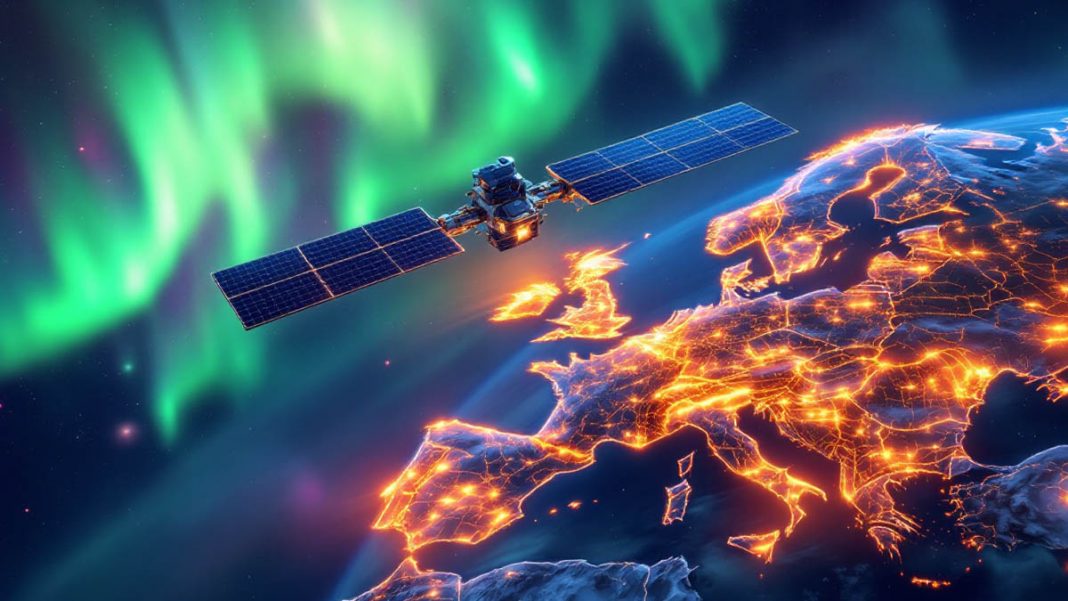
Space-based solar power (SBSP) could transform Europe’s journey to net-zero emissions by 2050. According to a new study from King’s College London, harnessing solar power from space has the potential to reduce Europe’s need for land-based renewable energy by as much as 80%, dramatically reshaping how the continent produces and stores clean energy.
Cutting Costs and Storage Needs
The research, published in Joule, highlights how SBSP could slash Europe’s reliance on energy battery storage by more than two-thirds, a key factor in stabilizing renewable grids. Moreover, NASA’s proposed RD1 design for space-based solar panels could lower the overall cost of Europe’s power system by up to 15%, delivering annual savings of 35.9 billion euros. These savings would come from reduced spending on generation, storage, and energy infrastructure.
The Science Behind Solar Panels in Space
Unlike terrestrial solar farms, space solar panels orbit above the Earth’s atmosphere, receiving uninterrupted exposure to sunlight. This makes them immune to cloud cover, natural disasters, and the day-night cycle, ensuring continuous energy collection. The captured energy would then be transmitted wirelessly to ground-based stations, where it would be converted into electricity and fed into the grid.
Why Europe Needs Space-Based Solar Power
Europe’s push toward net-zero faces challenges: massive investment requirements, limited land availability, and the pressure of transitioning quickly. By supplementing traditional renewables with space-based power, the continent could drastically reduce the land footprint of solar and wind projects while securing a reliable and climate-resilient energy supply.
Expert Perspectives on the Future
Professor Wei He, Senior Lecturer at King’s College London and lead author of the study, explained: “For the first time, we have shown the positive impact this technology could provide for Europe. Although feasibility is still under review, the economic and environmental potential is vast.” He also emphasized that reaching net-zero by 2050 will demand bold innovations like SBSP to complement ground-based renewables.
A Milestone in Renewable Energy Research
This is the first study to estimate the cost-effectiveness of space solar technology for the European market. It positions SBSP not just as a futuristic idea but as a serious contender in the continent’s clean energy strategy. If successfully implemented, Europe could see an unprecedented shift in how energy is generated, stored, and distributed.
Conclusion
Space-based solar power is no longer science fiction—it’s a real possibility that could redefine Europe’s energy future. By cutting renewable energy demands on land by 80%, reducing storage needs, and saving billions annually, SBSP could play a pivotal role in achieving climate goals. While challenges remain, the research underscores that the sky—quite literally—may hold the solution to Europe’s energy transformation.