


A Greener Approach to Renewable Energy
In recent years, the demand for renewable energy has soared, but it often comes at a high environmental cost. Traditional solar farms require massive land areas, forcing the destruction of forests to make room for large flat-panel installations. This practice harms ecosystems and accelerates climate change. To tackle this issue, researchers in South Korea have introduced a revolutionary idea: solar panels designed as trees.
What Are Solar Trees?
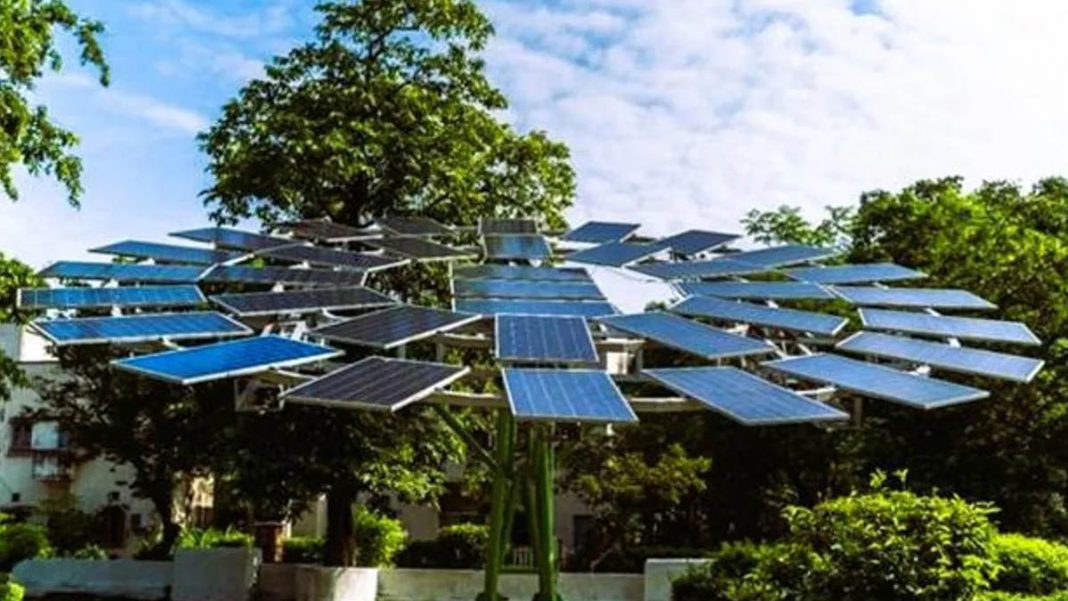
Unlike conventional panels spread across cleared land, solar trees are vertical structures resembling real trees, with solar modules arranged like branches and leaves. These innovative systems allow sunlight to filter through to the forest floor while still generating electricity. Instead of replacing natural forests, they integrate into them—offering clean energy without the need for deforestation.
Energy Production Without Deforestation
According to modeling by Dan-Bi Um from the Korea Maritime Institute, these futuristic installations can preserve up to 99% of forests, compared to traditional solar farms that leave as little as 2% intact. Just 63 solar trees installed along forest edges or walking trails could generate as much power as a 1-megawatt solar farm. This means sustainable energy production without sacrificing biodiversity.
Urban and Global Applications
Solar trees aren’t just for forests. In cities, they can provide shade, reduce the urban heat island effect, and even power electric vehicle charging ports or wireless charging benches. Their dual role—creating comfort while generating energy—makes them ideal for crowded urban spaces.
Globally, this technology could be a game-changer. From the Amazon to the Appalachian forests, solar trees could protect ecosystems while still advancing clean energy goals.
Challenges Ahead
Despite their promise, solar trees are not yet widespread. The cost remains higher than flat panels, and only a few companies manufacture panels specifically for this design. Shading between branches can reduce efficiency, though new vertical and spiral designs are improving performance. Experts suggest that early adoption may require government subsidies or climate fund support.
A Step Toward Sustainable Energy
The research, published in Scientific Reports, highlights that solar trees combine ecological preservation with renewable power generation. While challenges remain, the technology offers a unique solution for nations where land is limited and expensive. As climate change accelerates, solar trees may soon stand tall as symbols of balance between technology and nature.