


A Breakthrough in Microrobotics
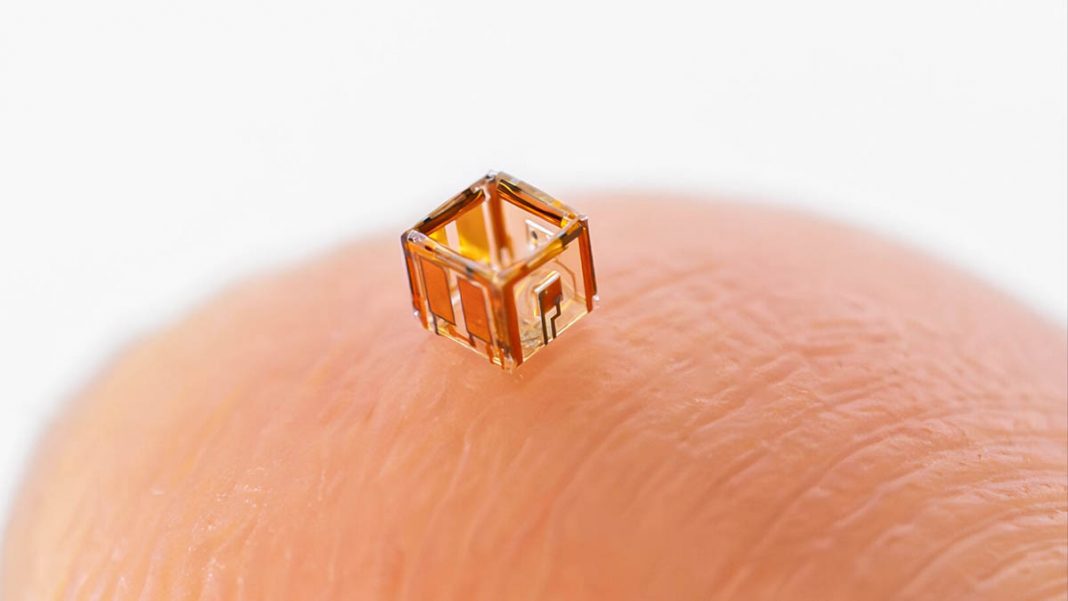
In a groundbreaking advancement, researchers at the Research Center for Materials, Architectures and Integration of Nanomembranes (MAIN) at Chemnitz University of Technology have unveiled a new generation of autonomous microrobots called smartlets. These miniature devices, each just a millimeter in size, can now communicate, respond, and collaborate in water—marking a significant leap toward intelligent microrobotic systems.
What Makes Smartlets Unique
Unlike earlier microrobots that required large external systems for control, smartlets are fully self-contained. Each unit integrates sensors, actuators, onboard energy harvesters, and microchips. They can receive and transmit optical signals, interpret data, and coordinate with other smartlets nearby. This functionality is powered by photovoltaic cells and guided by embedded micro-LEDs and photodiodes, enabling wireless optical communication.
Origami-Inspired Engineering
The microrobots are crafted using a flexible origami-based design, allowing a flat electronic system to autonomously fold into a 3D cube. This structure maximizes surface area for solar energy harvesting, computational logic, and interactive signaling. When placed in water, the smartlets generate buoyancy-driven movement using tiny bubble engines, allowing them to float and maneuver while broadcasting optical pulses to direct others.
Multi-Robot Collaboration in Action
What sets smartlets apart is their ability to engage in synchronized, multi-robotic interactions. For instance, when one robot receives a light signal, it can decode and trigger coordinated behavior in others. This wireless communication loop eliminates the need for external antennas, magnets, or cameras. Each smartlet interprets messages using its onboard processor, creating a decentralized, autonomous network.
Potential Real-World Applications
The potential uses for such biocompatible and untethered microrobots are vast. They could play roles in environmental monitoring, such as testing water quality, or assist in medical diagnostics by navigating confined biological environments. They also open new opportunities in soft robotics, distributed sensing networks, and autonomous inspection systems. With further enhancements—such as chemical or acoustic sensing—smartlets could evolve into multifunctional tools that adapt to complex fluid environments.
Looking Toward the Future
The research team envisions these microrobots evolving into dynamic, collective systems that resemble colonies of digital organisms. Much like natural colonies, each smartlet could specialize in tasks like sensing, communication, or movement—working together in a flexible robotic ecosystem. While this is still far from artificial life, the step toward distributed intelligence and self-organizing robotic collectives is already visible.
Conclusion
The creation of self-contained, communicative microrobots marks a pivotal moment for robotics. By enabling collaboration, adaptability, and autonomy in water, these devices pave the way for next-generation applications in medicine, environmental science, and beyond. As research progresses, smartlets could transform from experimental prototypes into essential tools for real-world problem solving in some of the most challenging environments.