

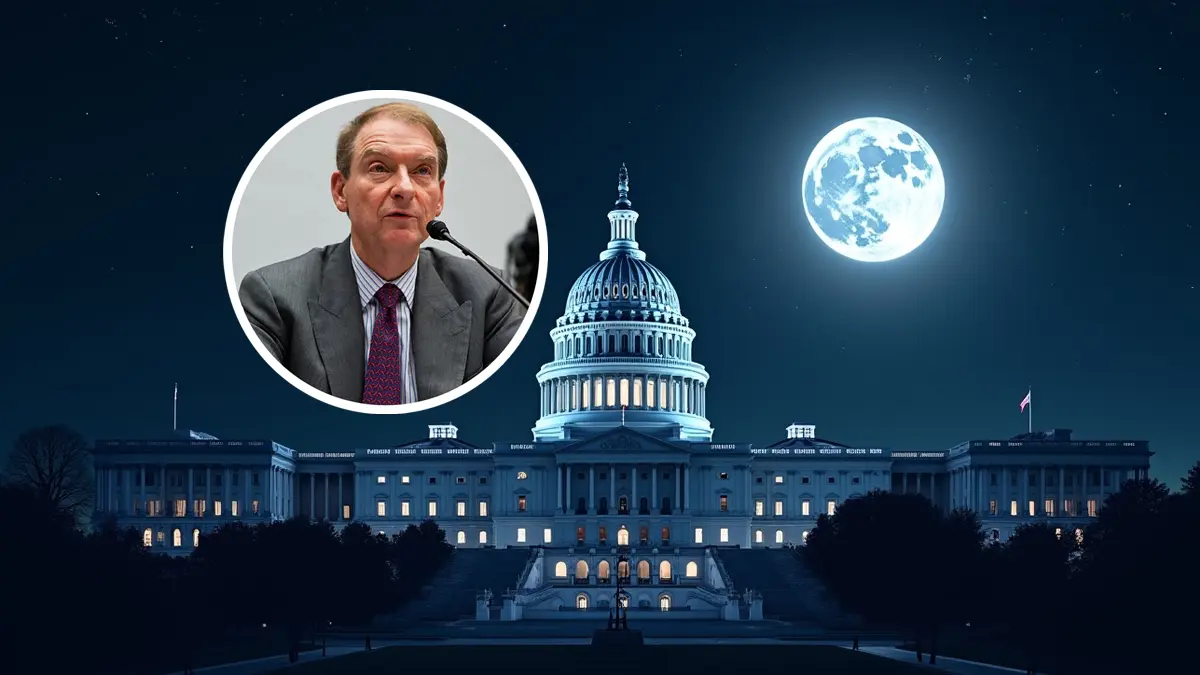
In a significant policy announcement, U.S. Securities and Exchange Commission (SEC) Chairman Paul Atkins unveiled a new phase of Project Crypto, an ambitious initiative aimed at creating a clear, consistent, and innovation-friendly regulatory framework for digital assets. Speaking at a policy briefing in Washington, Atkins emphasized that the “economic reality” of digital assets matters more than regulatory labels, a principle that could reshape how cryptocurrencies, tokens, and NFTs are classified in the United States.
Launched in August 2025, Project Crypto seeks to build a structured and transparent regulatory foundation for the crypto industry, promoting clarity, investor protection, and innovation. The latest phase of the initiative focuses on establishing a token taxonomy system grounded in the Howey Test, the traditional standard used to determine what qualifies as a security. “We’re drawing clear lines and explaining them in plain language,” Atkins said.
He clarified that most crypto tokens currently circulating are not securities by nature, even if they were initially sold under investment contracts. Atkins criticized the outdated notion that any token once classified as a security must remain one indefinitely. “Such rigidity defies logic and risks driving innovation offshore,” he warned. Instead, the SEC aims to offer legal certainty for innovators while maintaining strong investor safeguards.
Atkins also outlined a proposed categorization of digital assets:
- Digital goods or network tokens,
- Digital collectibles,
- Digital instruments, and
- Tokenized securities, which would remain under SEC oversight.
This classification, he explained, will make it easier for developers, exchanges, and investors to understand compliance requirements and operational boundaries.
Highlighting the SEC’s collaborative stance, Atkins called for joint action with Congress, the Commodity Futures Trading Commission (CFTC), and traditional banking regulators to develop an integrated legal framework that accommodates non-security crypto assets. “We’re not seeking to expand SEC’s jurisdiction for its own sake,” he said. “Our mission is to enable capital formation while protecting investors.”
As part of Project Crypto, the SEC is also working on a “tailored offering regime” for tokens tied to investment contracts. This framework is designed to support responsible capital formation, allowing smaller blockchain projects to experiment, raise funds, and grow without being stifled by disproportionate compliance costs. Atkins confirmed that formal crypto market rules are expected to be published by late 2025 or early 2026.
Since assuming office in April, Atkins has pushed for regulatory transparency and rule-based governance in crypto markets. His leadership marks a shift from enforcement-heavy policies toward principled oversight that values clarity, collaboration, and innovation.
Atkins reiterated that Project Crypto is not a promise of deregulation, but a “commitment to integrity, transparency, and the rule of law.” He concluded, “We will not let fear of the future keep us trapped in the past. Each token represents not just technology, but people — innovators, investors, and citizens striving for prosperity. Our duty is to serve them all.”
In conclusion, the unveiling of Project Crypto’s new phase marks a turning point for U.S. crypto regulation. By prioritizing economic reality over labels, and emphasizing collaboration across agencies, Atkins’ SEC is seeking to build a balanced regulatory environment that fosters innovation while safeguarding investors. If successfully implemented, this initiative could restore the United States’ position as a global leader in digital finance and blockchain innovation.