

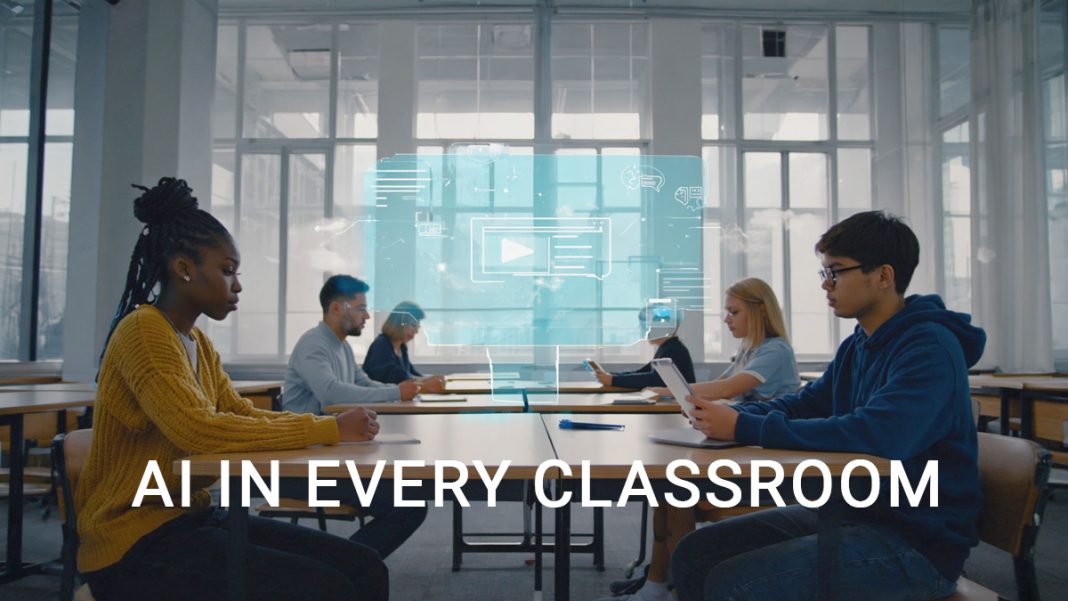
A New Era for Education: AI in Every Classroom
OpenAI is taking a bold step toward transforming higher education in the United States by aiming to integrate ChatGPT into every university. According to The New York Times, the company plans to make its AI assistant available to students from the moment they enroll, offering academic and career support throughout their educational journey.
ChatGPT Edu: More Than Just a Free Tool
To meet the unique demands of educational institutions, OpenAI has developed ChatGPT Edu, a specialized version of its AI tool. Unlike the free version, ChatGPT Edu offers enhanced privacy protections, custom features, and tailored capabilities designed for academic environments.
In January 2025, California State University became one of the first large institutions to roll out ChatGPT to its student body—more than 460,000 students. University leadership stated that this move is a step toward preparing students for California’s AI-driven economy of the future.
Following suit, other major universities such as the University of Maryland at College Park and Duke University have adopted the platform. Duke, notably, provided its students unlimited access to ChatGPT in early June, signaling strong institutional support for AI integration.
More Than Homework Help: Career Assistance Built In
OpenAI isn’t just targeting classroom assistance. According to Lia Belsky, OpenAI’s VP of Education, the AI assistant will also support students during job searches and career planning. This is made possible through ChatGPT’s “memory” feature, which allows it to recall previous interactions with the user and personalize responses accordingly.
This level of contextual awareness can help the AI tailor guidance on resumes, interview preparation, and job applications to align with a student’s academic background and career goals.
Building the Infrastructure of Tomorrow’s Universities
OpenAI envisions a future where AI tools are a core part of higher education infrastructure. As more institutions begin to see the value of AI in the classroom and beyond, the adoption of ChatGPT Edu may become a new standard rather than a novelty.
Belsky emphasizes that AI’s role in education will evolve, but its foundation is already being laid. “Over time, artificial intelligence will become part of the basic infrastructure of higher education,” she said.
Conclusion: Preparing Students for an AI-Driven World
With its ongoing rollout of ChatGPT Edu, OpenAI is reshaping the educational landscape in the U.S. From helping students learn more effectively to supporting their entry into the job market, AI is becoming an integral companion in the student experience. As more universities embrace this shift, the future of education may soon be inseparable from intelligent digital assistance.