


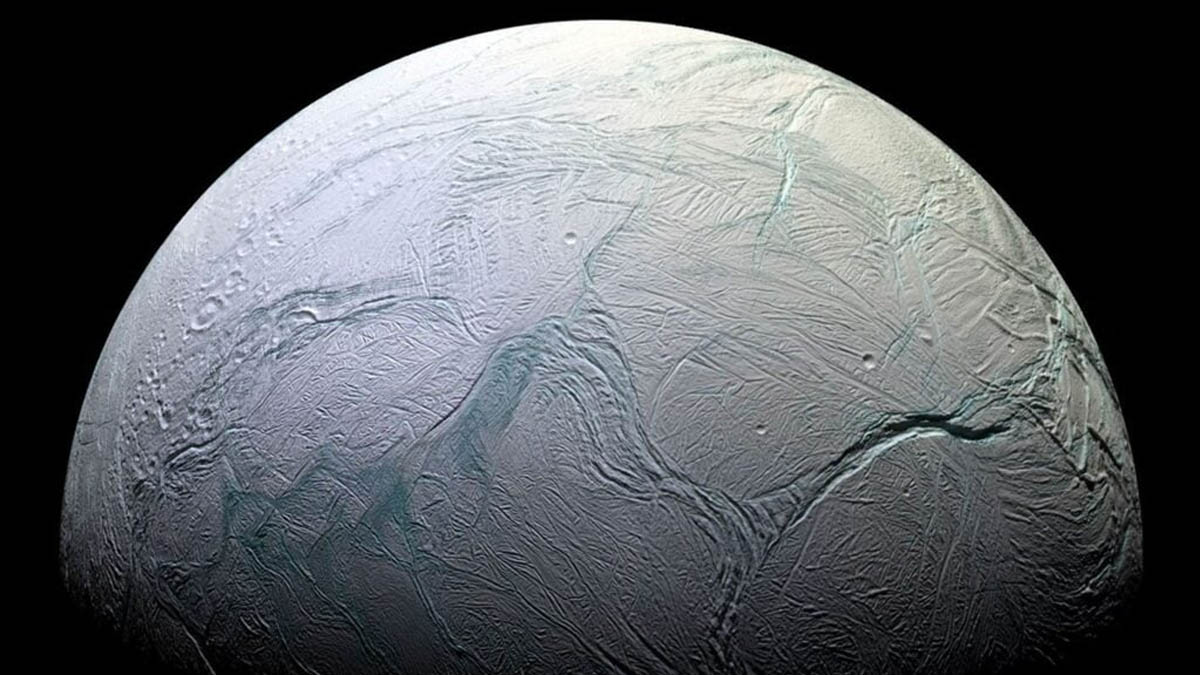
The legacy of NASA’s Cassini spacecraft continues to reshape our understanding of the solar system, years after its fiery plunge into Saturn in 2017. In a groundbreaking new analysis, scientists have uncovered organic compounds never before detected in the Saturnian system, deepening the mystery — and excitement — surrounding Enceladus, one of Saturn’s most fascinating moons.
An international research team analyzed data from Cassini’s Cosmic Dust Analyzer (CDA) and found that the icy plumes erupting from Enceladus’ south pole contain complex organic molecules that likely originated in a subsurface ocean beneath the moon’s frozen crust. These discoveries add compelling evidence that Enceladus could harbor conditions suitable for life.
“We found a rich organic inventory in Enceladus’ plume,” explained Dr. Fabian Klenner, postdoctoral researcher at the University of Washington. “Having clear evidence of a variety of organic compounds from inside an extraterrestrial water world is incredible and further strengthens Enceladus’ potential for habitability. It appears that Enceladus has all the ingredients for life as we know it.” The findings, published in Nature Astronomy, highlight the discovery of esters, alkenes, and ether compounds — chemical structures that are essential components of lipids, the building blocks of cellular membranes.
The Cassini mission, launched in 1997, performed multiple flybys of Enceladus and revealed that its south polar region was venting jets of icy water and gas into space. These plumes not only feed Saturn’s faint E ring but also carry molecular signatures that hint at hydrothermal activity — similar to the volcanic vents deep in Earth’s oceans where scientists believe life may have originated.
According to Dr. Nozair Khawaja, research leader at Freie Universität Berlin, “We suspect that hydrothermal vents exist at the bottom of Enceladus’ ocean. On Earth, such environments are teeming with microbial life, so finding similar conditions elsewhere is extraordinary.”
These organic materials, discovered just minutes after being ejected from the moon’s surface, offer an unprecedented glimpse into Enceladus’ hidden ocean chemistry. The new analysis goes beyond what Cassini’s earlier E ring data revealed, suggesting that the moon’s internal ocean is dynamic, active, and chemically rich.
The implications are immense. If Enceladus possesses liquid water, organic molecules, and hydrothermal activity, it meets nearly every criterion scientists associate with habitability. The discovery has fueled growing interest in future missions to the outer solar system. NASA’s upcoming Europa Clipper mission, currently en route to Jupiter, is designed to study another ocean world with similar potential — Europa, one of Jupiter’s largest moons.
As Dr. Klenner, who will soon join the University of California, Riverside, noted, “It’s phenomenal to continue learning from the Cassini mission. Much of the CDA data remains unexplored, and we’re only scratching the surface of what it may still reveal.”
Conclusion:
The detection of new organic compounds on Enceladus strengthens the argument that this icy moon could be a cradle for extraterrestrial life. As scientists continue to mine Cassini’s data, Enceladus stands as one of the most promising worlds beyond Earth where biology might exist. The next decade of space exploration could finally answer one of humanity’s oldest questions — are we alone in the universe?