

Major Studios Take Legal Action Against AI Image Generator
In a growing clash between artificial intelligence and intellectual property rights, Walt Disney Company and NBCUniversal have filed a lawsuit against Midjourney, a company known for its AI-powered image generation. The two media giants claim that Midjourney is responsible for producing unauthorized, high-quality images of their copyrighted characters — a direct violation of copyright law.
The lawsuit seeks maximum statutory damages, a full accounting of Midjourney’s revenue linked to the alleged infringements, and a court injunction to halt further use of protected content.
AI Requests That Cross the Legal Line
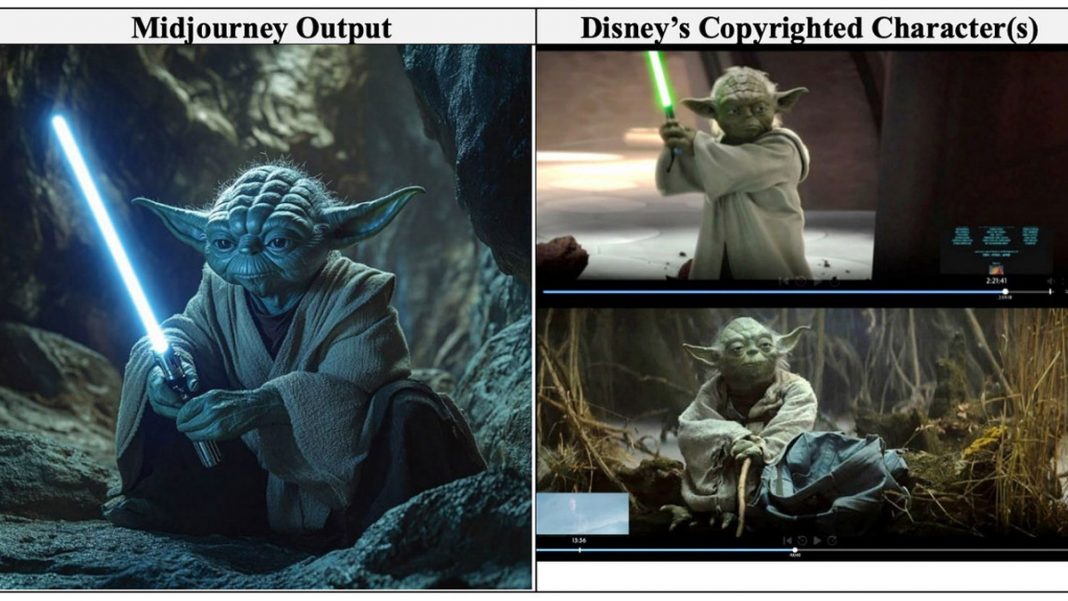
According to the lawsuit, users can easily generate AI images of iconic characters like Darth Vader or the Minions by simply typing text prompts into the Midjourney platform. The service then returns detailed, downloadable images that Disney and NBCUniversal argue are “nearly identical reproductions” of their original, copyrighted creations.
The complaint emphasizes that these images are not casual sketches — they are professional-grade visuals that could mislead consumers and dilute the studios’ intellectual property.
The Core of the Dispute: Training Data and Control
The studios also allege that Midjourney trained its AI models using vast amounts of copyrighted material without obtaining the appropriate licenses. What’s more troubling, they argue, is that Midjourney failed to implement any safeguards to prevent the reproduction of protected content, even after being formally requested to do so.
Instead, Midjourney continued releasing improved versions of its software, which made it even easier to generate realistic depictions of characters from Star Wars, Despicable Me, and other popular franchises.
Adding to the concern, the lawsuit mentions Midjourney’s plans to launch a video-generation service, which could further intensify copyright violations by bringing motion and voice into the mix.
A Wider Legal Trend in the AI Industry
This lawsuit follows a pattern of increasing legal pressure on AI companies. Earlier this month, Reddit sued Anthropic for allegedly using its platform’s data without consent to train AI models. Similarly, The New York Times and other media organizations have filed lawsuits against OpenAI and Microsoft over unauthorized content usage.
However, Disney and NBCUniversal claim that their case is more clear-cut, as Midjourney’s outputs visibly replicate protected characters, not just “learn” from underlying materials.
Conclusion: A Crucial Moment for AI and Copyright Law
This lawsuit could set a precedent in how AI companies manage copyrighted content. As more creative tools rely on machine learning, the balance between innovation and legality becomes increasingly delicate. For Disney and NBCU, this is not just about images — it’s about defending decades of creative investment.
Whether Midjourney will be forced to scale back its features or change its approach to training remains to be seen. But one thing is clear: the legal landscape for generative AI is rapidly evolving, and the stakes are higher than ever.