


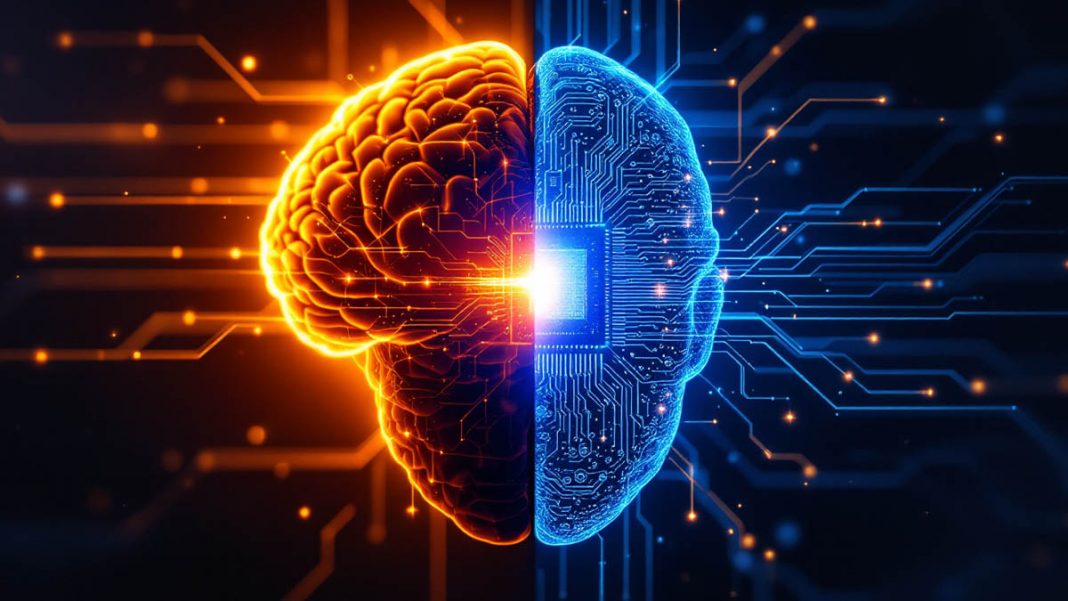
Rethinking AI Efficiency Through the Human Brain
As artificial intelligence continues to advance at breakneck speed, so does its hunger for energy. A single AI response can consume over 6,000 joules, while your brain operates on just 20 joules per second to keep you alive and thinking. This stunning contrast is what drives researchers at the University at Buffalo to reimagine computing itself — by mimicking the human brain.
Why the Brain is the Gold Standard
“There’s nothing in the world as energy-efficient as our brain,” says Dr. Sambandamurthy Ganapathy, a leading researcher in UB’s Department of Physics. “It’s evolved to maximize data processing while minimizing energy use.” Inspired by this, his team is exploring a new realm known as neuromorphic computing — a blend of neuroscience and computer engineering that may offer the next major leap for AI.
What Is Neuromorphic Computing?
Neuromorphic computing refers to both hardware and software systems that emulate the brain’s architecture and processes. UB researchers are focusing specifically on the hardware aspect, aiming to build chips that store and process information in the same place, just like our brains do. This approach not only saves energy but also allows more human-like problem-solving.
Artificial Neurons and Synapses: The Key to Next-Gen AI
To make this possible, the team is developing artificial neurons and synapses using advanced materials called phase-change materials (PCMs). These PCMs can switch between conductive and resistive states, effectively “remembering” past signals and adapting over time — much like biological synapses do when repeatedly activated.
Beyond Binary: A New Type of Logic
Current computers operate on binary logic — either on or off, one or zero. But brains operate in shades of gray, responding differently to the same input based on context. Neuromorphic chips may enable a similar nonlinear logic, allowing AI to adapt more intuitively to real-world scenarios, such as interpreting vague instructions or navigating unexpected obstacles in self-driving cars.
Targeting Real-World Applications
The goal isn’t to create a conscious computer, but rather to improve real-time AI decision-making. Self-driving vehicles are a perfect test case, as they rely on quick, local computations. Unlike traditional AI, which depends on remote servers, neuromorphic chips can make split-second decisions directly within the vehicle — potentially saving lives on the road.
What’s Next for Neuromorphic Chips?
UB researchers are now working on synchronizing oscillations across multiple chips to replicate complex brain functions like pattern recognition and motor control. This may soon lead to highly specialized chips — each tailored to solve specific types of problems — paving the way for a new era in AI computing.
Conclusion
By combining insights from quantum physics, neuroscience, and material science, neuromorphic computing holds the potential to drastically reduce AI’s energy consumption while making it smarter and more adaptable. Though it may not replace today’s computers, this brain-inspired approach could transform the way we build and use AI in the near future.