


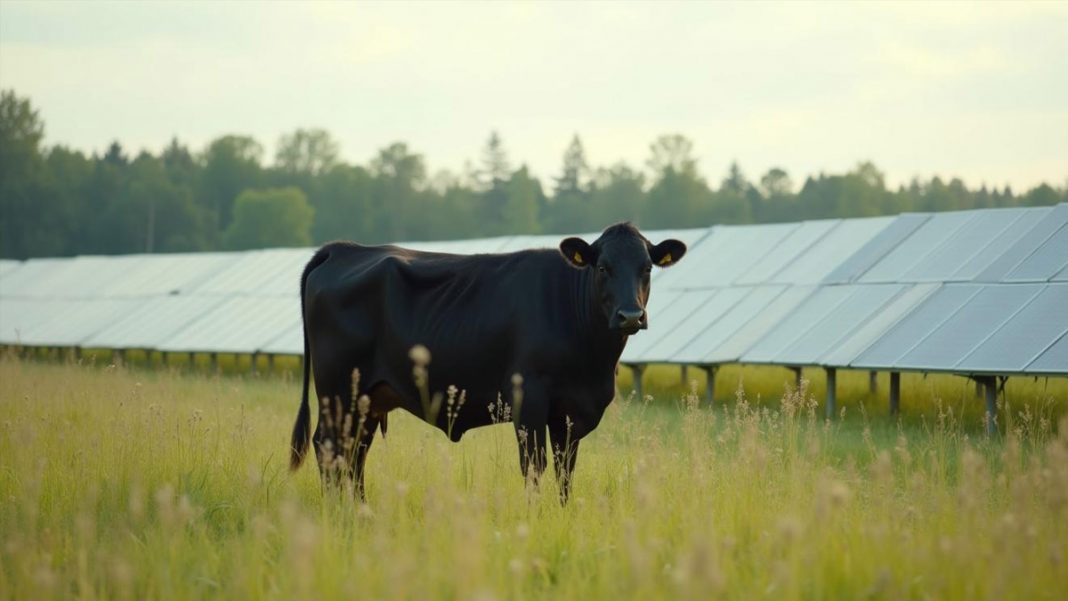
California’s Agricultural Pivot Toward Solar Energy
California’s vast farmland is undergoing a quiet but powerful transformation. More and more farmers are leasing their land for solar panel installations, turning once fertile fields into energy-producing powerhouses. With prolonged droughts, rising costs, and restricted water access threatening traditional farming, solar energy is becoming a highly attractive alternative.
The Rise of Agrivoltaics in the Golden State
According to a 2022 USDA study, nearly 117,000 U.S. farmers already use some form of solar power. But California is leading the charge. Researchers recently analyzed over 6,500 solar installations on U.S. farmland, including nearly 1,000 in California alone, spanning approximately 40.5 square kilometers. For many, leasing land for solar has proven more profitable — and far less risky — than growing almonds, rice, or olives.
Why Farmers Are Making the Switch
In California’s Central Valley, which produces a quarter of the U.S. food supply, the pressures are immense. From climate change to water conservation laws, farmers face increasing challenges. Installing solar panels provides a steady income stream, without the need for seeds, fertilizers, or irrigation. Some farmers earn up to $50,000 annually per acre (0.4 hectares) from solar installations — 25 times more than traditional farming yields.
Those leasing their land rather than owning the panels themselves still benefit, earning around $1,100 per acre per year without the upfront costs. In both cases, solar is offering a lifeline in uncertain times, reducing operational costs while helping California meet clean energy goals.
Environmental and Social Impact
The environmental benefits are substantial. Most of the solar arrays have been installed on previously irrigated farmland, saving enough water to supply 27 million people annually or irrigate 30.5 square kilometers of orchards. Additionally, some farmers have left adjacent land fallow, thanks to stable solar income, further reducing water usage.
There is a tradeoff, however: land once used for food production is now out of agricultural use. Researchers estimate that solar-covered farmland could have fed 86,000 people annually if cultivated. Yet, the electricity generated from those installations powers over 470,000 homes each year, providing clear economic and environmental advantages.
Conclusion: A Sustainable Shift or a Costly Trade?
California farmers are making strategic decisions to stay profitable and resilient. While there are valid concerns about losing agricultural land, the benefits of solar — increased income, water conservation, and clean energy production — cannot be overlooked. With continued state support, agrivoltaics may offer a long-term path to sustainability for both farmers and the planet.