


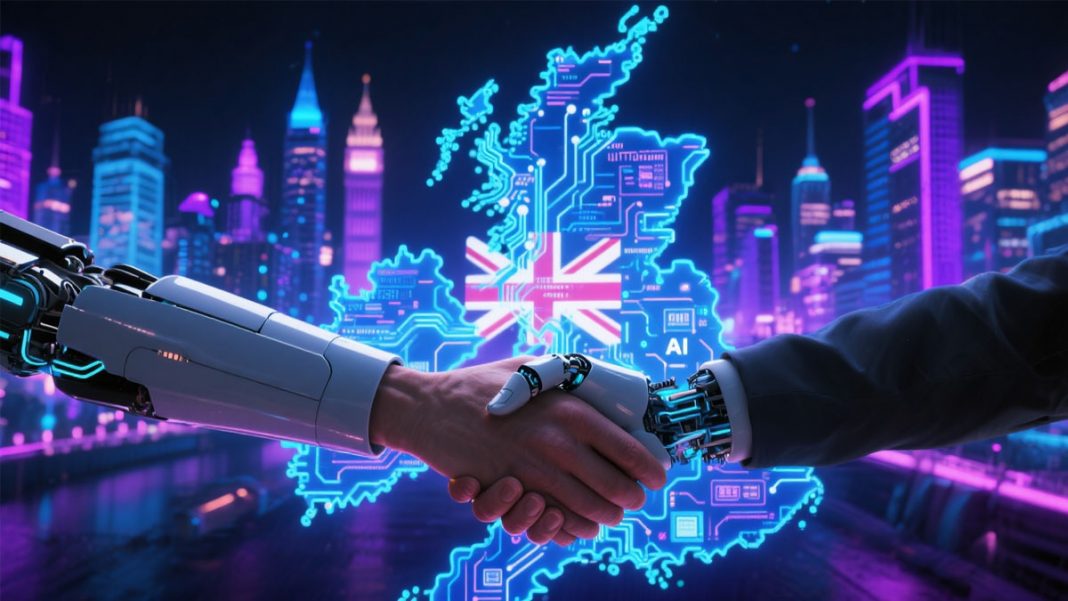
The United Kingdom has taken a bold step toward becoming a global artificial intelligence (AI) powerhouse, partnering strategically with OpenAI to accelerate research, infrastructure investment, and real-world AI adoption. This move reflects an urgent response to the global AI race, where nations like the United States, China, and India are making aggressive strides.
According to the UK’s newly announced collaboration with OpenAI, the goal is not only to expand AI capabilities across sectors such as healthcare, defense, education, and justice, but to also create the infrastructure backbone needed to support national-scale AI development.
A Billion-Pound AI Vision
The UK government has earmarked £1 billion to expand computing power and infrastructure over the next five years. These funds will help scale the country’s public computing capacity twentyfold, a move designed to empower researchers, startups, and government agencies to access AI capabilities that rival global leaders.
This initiative is part of Prime Minister Keir Starmer’s “Plan for Change”, an ambitious national roadmap that envisions the UK as a global AI superpower. The plan includes the creation of AI Growth Zones, investment in high-performance data centers, and AI-focused research hubs. These are not just speculative investments — private firms have already pledged $17 billion and committed to creating over 13,000 jobs to support this vision.
UK’s AI Market: Third Largest in the World
Britain already commands a formidable AI presence. In 2024, the UK AI sector was valued at £72.3 billion, placing it behind only the US and China. The country boasts over 2,300 AI startups, including eight unicorns, and has attracted $230 billion in combined company valuations in Q1 of 2025 alone.
Top names like Anthropic, Palantir, and OpenAI have chosen London for their European headquarters, thanks in part to the country’s strong talent pool and vibrant tech ecosystem. The Alan Turing Institute and elite universities provide a world-class foundation for R&D and workforce development.
AI’s Real-World Impact on British Industry
The influence of AI is already being felt across sectors:
- In healthcare, AI systems are helping detect diseases earlier and optimize treatment plans.
- In finance, institutions use machine learning for fraud detection and portfolio management.
- In cybersecurity, British firm Darktrace has emerged as a global leader with its autonomous threat detection technology.
- In pharma, startups like BenevolentAI and Exscientia are transforming drug discovery timelines using advanced AI models.
Defense Goes Digital
Perhaps the most transformative change is happening in defense. The UK Ministry of Defence is aggressively integrating AI in military planning, real-time battlefield intelligence, and autonomous systems development. Programs like FCAS (Future Combat Air System) aim to deliver sixth-generation fighter jets with onboard AI copilots and drone coordination capabilities.
A new “digital targeting network” is also in the works, combining sensor data from satellites, drones, and cyber systems to identify threats and assign precision strikes in real time. This shift aims to redefine modern warfare using AI as a strategic advantage.
AI With Ethics and Security in Mind
Importantly, the UK is not pushing ahead blindly. It remains committed to ethical and secure AI deployment, working closely with NATO and international partners to ensure democratic values and safety are at the core of its AI strategy. This includes implementing strict governance frameworks and ensuring responsible military use of AI technologies.
Conclusion: A Nation on the Edge of AI Greatness
With strong private sector backing, strategic infrastructure investments, and partnerships with pioneers like OpenAI, the United Kingdom is positioning itself to not just compete — but lead in the global AI arena. From national security to healthcare, and from education to innovation, the UK’s AI strategy is more than a vision — it’s a fast-moving reality. Now, the only question that remains is: Will the rest of the world be able to keep up?