

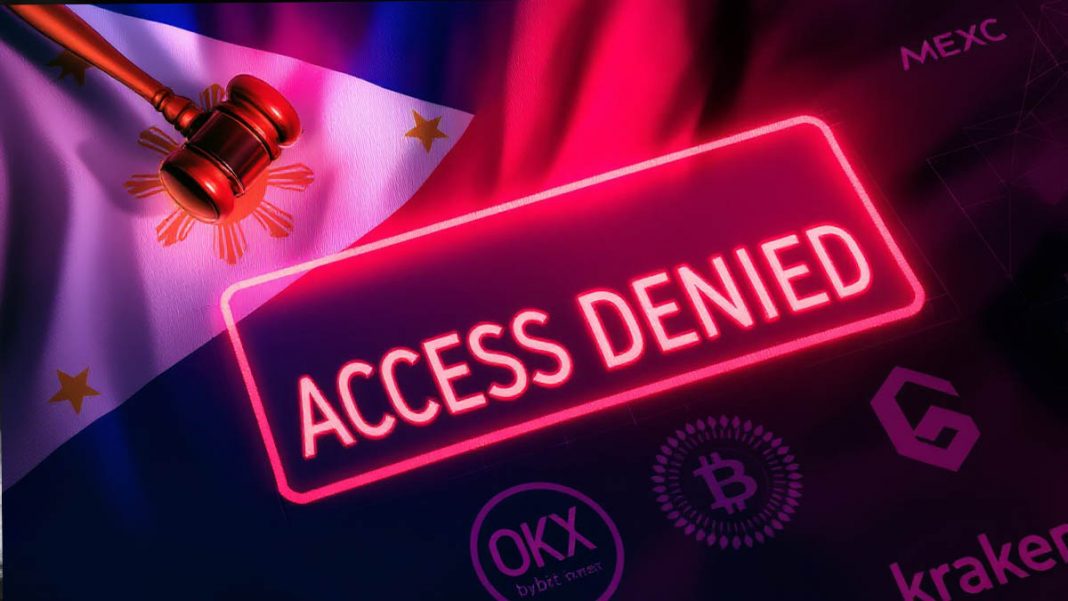
The Philippines Securities and Exchange Commission (SEC) is ramping up efforts to regulate the local crypto market by targeting unlicensed cryptocurrency exchanges. In its latest move, the regulator has announced plans to block access to ten major crypto trading platforms, including OKX, Bybit, and MEXC, which operate in the country without the necessary authorization.
This decision comes as part of the SEC’s ongoing campaign that started in March 2024 to crack down on exchanges offering crypto-related services illegally. At that time, local platforms like MiTrade and OctaFX were the first to face sanctions. Later, Binance was also added to the growing list of restricted exchanges.
The commission noted that these exchanges are actively marketing their services in the Philippines and remain accessible to users, despite lacking the required licenses. The regulator cited concerns over the absence of effective Anti-Money Laundering (AML) and counter-terrorism financing measures on these platforms.
According to the SEC, the following exchanges will be affected by the new enforcement action:
OKX, Bybit, MEXC, KuCoin, Bitget, Phemex, CoinEx, BitMart, Poloniex, and Kraken.
All of these platforms are currently operational in the Philippines, with many maintaining a strong marketing presence, making them accessible to a large number of local users.
To enforce compliance, the SEC plans to block websites and mobile applications of the mentioned exchanges. Additionally, the commission aims to contact major platforms like Google and Apple, urging them to remove ads and promotional content related to these unlicensed entities.
Users across the Philippines have been warned not to trade or store assets on these platforms to avoid potential financial risks and legal complications. The SEC emphasizes that only exchanges with a valid license ensure user protection under local financial laws.
The Philippines is not the only country tightening crypto regulations. In a parallel development, Thailand’s regulatory body has also taken action. Since late June 2025, it has restricted access to five crypto exchanges as part of its growing oversight in the digital asset space.
Conclusion:
The Philippines SEC’s proactive stance highlights the country’s commitment to building a safer and more transparent crypto environment. As global regulators intensify scrutiny over digital assets, users are encouraged to remain vigilant and prioritize licensed platforms when trading. Ensuring AML compliance and regulatory approval is not only a legal necessity—it’s also key to protecting investors in a rapidly evolving digital economy.