


Researchers in Finland have unveiled a groundbreaking discovery that could reshape how the renewable energy sector approaches solar protection. Scientists from the University of Turku, in collaboration with Aalto University and Wageningen University, developed a biodegradable film made from red onion peel extract that shields solar cells from harmful ultraviolet (UV) radiation more effectively than conventional plastic films.
Traditional solar modules face a persistent challenge: while they efficiently convert sunlight into electricity, UV rays degrade sensitive components, particularly in dye-sensitized solar cells (DSSC). To combat this, manufacturers typically use petroleum-based plastics like polyethylene terephthalate (PET) as protective films. However, these plastics deteriorate over time, are difficult to recycle, and offer limited durability.
The Finnish team sought a sustainable alternative and turned to nanocellulose, a renewable material derived from wood. By blending nanocellulose with aqueous extracts from red onion peel, they created a biofilm that blocks 99.9% of UV radiation up to 400 nanometers. Crucially, the film allows over 80% of visible and near-infrared light—the essential spectrum for electricity generation—to pass through.
Tests revealed that this new CNF-ROE film demonstrated exceptional resilience. Under 1,000 hours of artificial sunlight exposure, the biofilm showed minimal discoloration, while the DSSC cells beneath retained structural integrity. Modeling suggests the biofilm could extend solar cell lifespan up to 8,500 hours, compared to just 1,500 hours when using standard plastic filters.
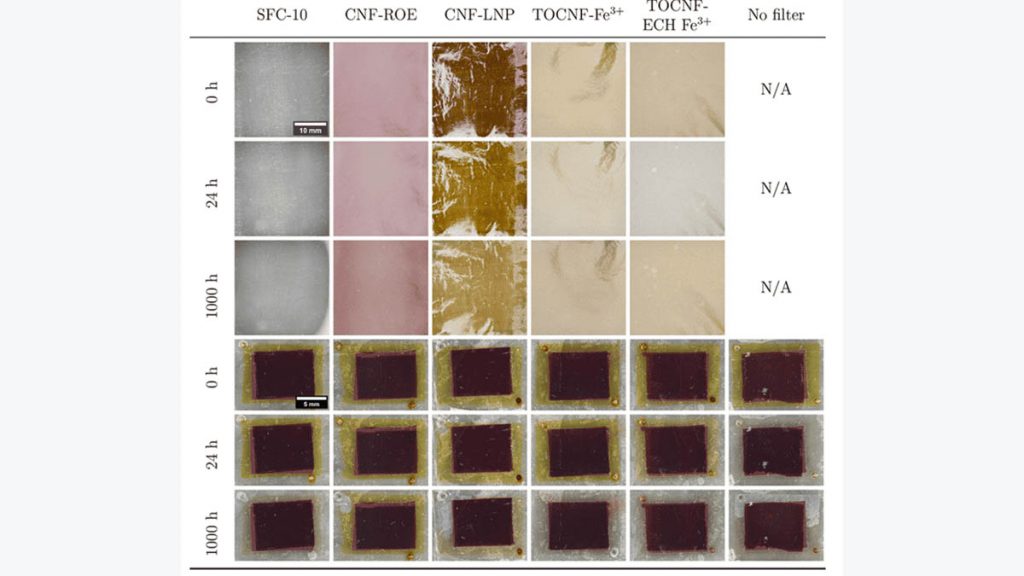
What sets this innovation apart are the natural pigments in onion skin. Compounds such as anthocyanins, flavonol glycosides, and phenolic acids not only provide rich coloration but also enhance UV absorption and chemical stability. This unique combination grants the biofilm durability, transparency, and eco-friendliness unmatched by current commercial options.
The researchers also tested films treated with iron ions and lignin nanoparticles—both of which showed promise initially but degraded much faster under UV stress. In contrast, the onion-derived biofilm retained performance significantly longer, confirming its superior protective capabilities.
Looking ahead, the Finnish team envisions integrating these biodegradable UV-protective films into next-generation solar panels, wearable devices, and remote sensors where recyclability and sustainability are essential. As the demand for green energy solutions grows, using agricultural byproducts like onion peel not only reduces waste but also delivers materials that outperform petroleum-based alternatives.
Conclusion
This innovation highlights how food waste can be transformed into high-value technology, pushing solar energy closer to a sustainable future. With onion peel extracts providing better UV protection than industrial plastics, the renewable energy industry could soon adopt eco-friendly films that are both more durable and more environmentally responsible.