


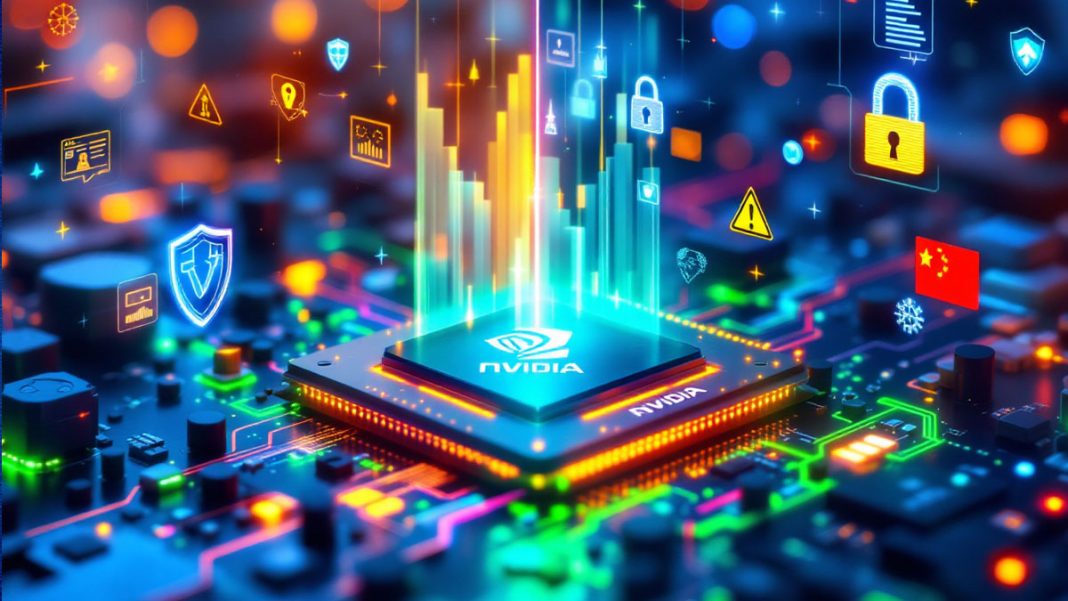
Nvidia Denies Hidden Access in Its Chips
Nvidia, the global leader in GPU and AI chip manufacturing, has firmly denied allegations that its chips contain backdoors that could allow unauthorized access or remote control. This statement comes after a series of reports and increasing pressure from Chinese cybersecurity regulators, who recently questioned the company’s representatives in connection with the sale of its H20 AI processors to China.
According to CNBC, Nvidia clarified its position following concerns about national security risks and potential vulnerabilities in its cutting-edge chips. On August 1st, the company issued a statement asserting, “Cybersecurity is a top priority for us. Nvidia chips have no ‘backdoors’ that allow anyone to remotely access or control them.”
Why China Is Concerned About Nvidia’s Chips
Earlier this year, Nvidia received U.S. government approval to resume sales of its advanced H20 AI chips in China, a major step after export restrictions halted their delivery. However, this greenlight triggered a fresh wave of cybersecurity reviews from Beijing. The Cyberspace Administration of China (CAC) summoned Nvidia officials to answer detailed questions about the chips’ internal architecture and any embedded surveillance or tracking technology.
The CAC’s investigation emphasized previous concerns raised about advanced geolocation, tracking, and remote shutdown capabilities allegedly built into U.S. semiconductors. These fears are echoed by Chinese authorities and some American lawmakers, who suspect that Nvidia’s products may have the capacity to be used as surveillance or espionage tools.
U.S. Lawmakers Push for Stronger Security in AI Hardware
In parallel with China’s scrutiny, Nvidia is also facing pressure at home. In May, Senator Tom Cotton and a bipartisan group of eight members of Congress introduced the U.S. Chip Security Act. This legislation proposes mandatory security verification mechanisms and geolocation tracking systems in chips made by companies like Nvidia.
Representative Bill Foster, one of the bill’s co-authors, alongside several independent cybersecurity experts, confirmed that tracking technologies are not only possible but have already been integrated into some advanced chips. While Nvidia has not publicly commented on these technical specifics, their denial of “backdoors” suggests a commitment to transparency and trust.
China’s Strategic Dependence on Nvidia Hardware
Despite regulatory pressure, Chinese tech firms are still eager to acquire high-performance Nvidia chips, especially for training large AI models. Reports indicate that China is planning to purchase over 115,000 Nvidia units, underlining its reliance on American technology to power next-generation data centers and AI infrastructure.
This demand highlights the complicated relationship between technological innovation and national security, especially in the realm of AI chip manufacturing. As tensions rise between global superpowers, companies like Nvidia must tread a fine line between commercial opportunity and geopolitical risk.
Conclusion: Navigating a Tense Global Tech Landscape
The Nvidia backdoor controversy reflects deeper global anxieties over technology sovereignty, cybersecurity, and AI infrastructure control. While the company has clearly denied embedding any unauthorized access mechanisms into its chips, both China and the U.S. continue to push for higher transparency and tighter regulation.
In the age of AI dominance, every chip matters. Nvidia’s future success may hinge not only on its ability to innovate but also on maintaining trust with global stakeholders — by proving that its technology is both secure and ethically designed.