


Revolutionizing Power: South Korean Scientists Unveil Long-Lasting Nuclear Battery
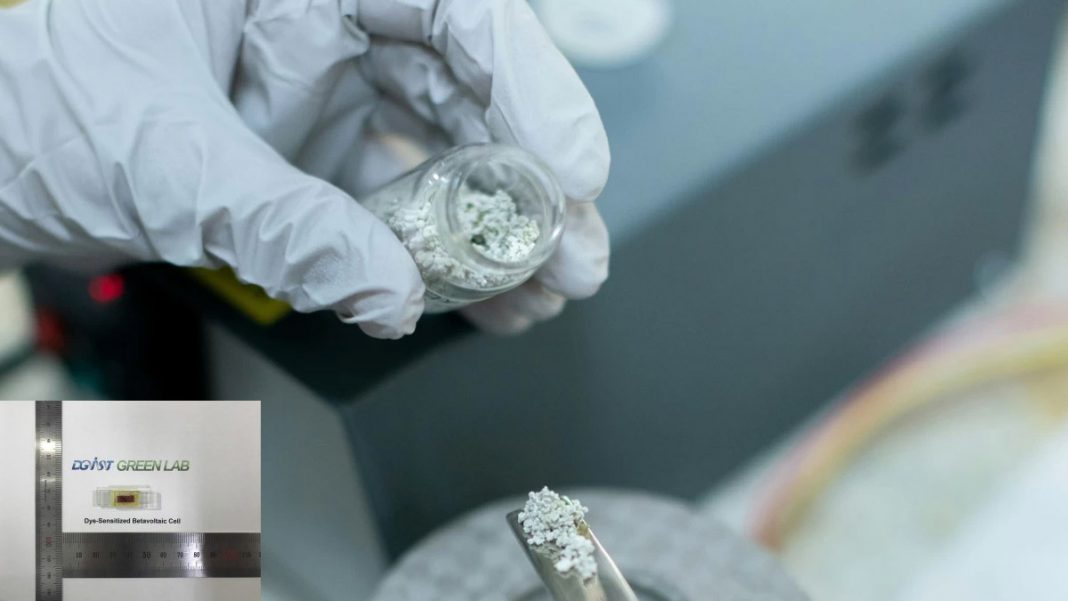
In a game-changing advancement for sustainable energy, a research team at the Daegu Gyeongbuk Institute of Science and Technology (DGIST) in South Korea has developed a nuclear battery that can power devices for decades without needing a recharge. Spearheaded by Professor Soo-Il In, the team introduced a perovskite-based betavoltaic element (PBE) that blends radioactive carbon-14 with advanced perovskite materials to achieve extraordinary energy stability and efficiency.
The Science Behind the Innovation
The core of this new technology lies in its use of radioactive carbon-14, a byproduct of nuclear reactors, paired with perovskite films enhanced by two chlorine-based additives: methylammonium chloride (MACl) and cesium chloride (CsCl). These materials strengthen the perovskite’s crystalline structure, ensuring more stable electron transport and long-term durability. During testing, the team reported an astounding 56,000-fold increase in electron mobility, allowing for continuous operation for nine hours — a huge leap from earlier models.
What Makes Betavoltaics Special?
Betavoltaic batteries convert beta particles emitted during radioactive decay into electrical energy. Since beta rays cannot penetrate human skin and are blocked by basic shielding materials like aluminum, this tech is considered biologically safe. The use of carbon-14 is particularly ingenious — it’s not only abundant and low-cost but also incredibly long-lived, with the potential to power devices for hundreds or even thousands of years.
Powering the Future, Safely and Sustainably
To further enhance energy conversion, the researchers incorporated titanium dioxide (TiO₂) — a semiconductor widely used in solar cells — treated with a ruthenium-based dye. The interaction between beta particles and the dye triggers an avalanche of electron reactions, which are then captured by the TiO₂ and transmitted through the circuit to generate electricity. The innovation doesn’t stop there: by using carbon isotopes in both the anode and cathode, the device maximizes beta emissions while reducing energy loss over distance.
Commercialization and Next Steps
According to Professor In, this study marks the first successful demonstration of a practically viable betavoltaic power source. The team is already looking ahead to commercialize the technology, especially for extreme environments where traditional batteries fail — such as in space exploration, medical implants, or deep-sea sensors.
Conclusion
This breakthrough offers a glimpse into the future of ultra-long-lasting energy sources. By combining nuclear science with nanomaterials and smart chemistry, the DGIST team has laid the groundwork for batteries that could power the next generation of devices for decades — or longer — without a single recharge. As the world moves toward sustainable and resilient power solutions, this innovation could redefine how we think about energy storage forever.