

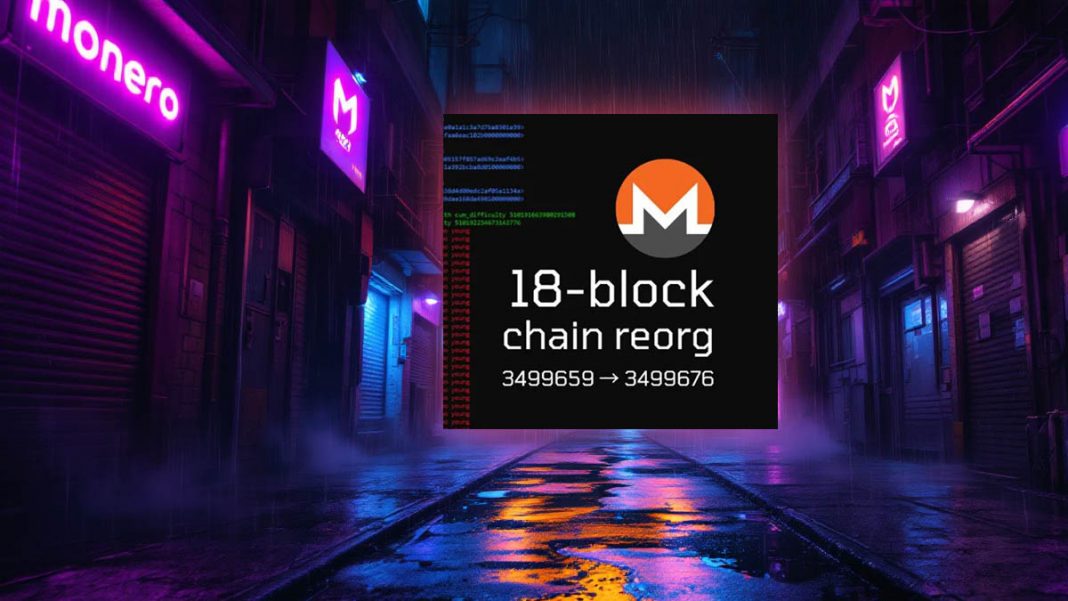
The Monero (XMR) blockchain has just experienced its largest reorganization in over a decade, raising alarm within the crypto community about the network’s security and resilience. On September 14, a surprise chain reorg involving 18 blocks wiped out 117 confirmed transactions, marking a major disruption in Monero’s normally stable operations.
At the center of the event is Qubic mining pool, which released a previously hidden chain that turned out to be longer than the active one. By design, Monero’s consensus rules recognize the longest valid chain as authoritative, leading nodes across the network to automatically accept Qubic’s version while discarding blocks from the original chain. This unexpected switch has been described by analysts as the most significant Monero blockchain reorganization ever recorded.
While some fear that the move reflects a dangerous centralization of mining power, others argue Qubic’s actions may have been a defensive strategy to stabilize the coin and prevent a potential crash. Despite community unease, Monero’s price climbed a few percentage points, currently trading around $322.
Still, the incident has triggered serious discussions about the future of Monero’s decentralization model. Experts warn that if large mining pools can unilaterally dictate the chain’s direction, Monero risks losing one of its core strengths: trustless, censorship-resistant privacy transactions. Some developers and node operators have proposed temporary DNS-level filtering, allowing only blocks from “trusted servers” to prevent another sudden takeover. Critics counter that this could undermine Monero’s decentralized ethos.
Security specialists are particularly concerned about double-spending vulnerabilities. According to Yu Xian, founder of SlowMist, the reorganization highlights a systemic weakness: “If the Monero community does not take block reorganizations seriously, this will remain a Damocles’ sword hanging over the network. Double-spend attacks may not happen yet, but they don’t necessarily require more than 51% of the hash rate to succeed.”
The Monero incident also fuels broader debates in the cryptocurrency world about the risks of proof-of-work blockchains, particularly those with smaller hash power compared to giants like Bitcoin. With regulators, exchanges, and institutional investors watching closely, Monero now faces pressure to balance privacy with stronger security guarantees.
Conclusion: The largest Monero reorganization in 12 years underscores the fragility of decentralized networks when concentrated mining pools gain outsized influence. While the immediate financial impact seems limited, the event raises critical questions about Monero’s long-term security model and whether the community is prepared to adopt defensive measures without sacrificing decentralization.