



Dell Broadcom BCM5820X Chip Flaws Expose Sensitive Data on Millions of Devices
A newly discovered set of security flaws in Broadcom’s BCM5820X chips has put tens of millions of Dell computers at serious risk. Security researchers at Cisco Talos identified five distinct vulnerabilities — CVE-2025-24311, CVE-2025-25215, CVE-2025-24922, CVE-2025-25050, and CVE-2025-24919 — affecting over 100 Dell PC models, mainly in the Latitude and Precision series. These chips power ControlVault3, Dell’s secure hardware module for storing biometric data, passwords, and smart card credentials.
According to Talos, the flaws could allow attackers to steal passwords, access fingerprint data, and take full control of the device without the user’s knowledge. In one alarming scenario, a hacker could implant a firmware backdoor into ControlVault, granting persistent, stealthy access to the compromised computer.
Widespread Impact Across Corporate and Government Devices
Many affected Dell laptops, including Rugged series models, are widely used in cybersecurity-sensitive industries and government agencies. In sectors where secure authentication is critical, ControlVault is often the default choice. These vulnerabilities therefore represent a serious security concern for organizations handling sensitive data.
Attack Scenarios Highlight the Risks
Cisco Talos researcher Philippe Lauléré demonstrated how CVE-2025-24919, a flaw in Windows ControlVault API’s insecure deserialization process, could be exploited. Even a non-admin user could trigger arbitrary code execution inside ControlVault firmware, leading to irreversible firmware modifications. This could enable an attacker to bypass biometric authentication entirely — for instance, accepting any fingerprint as valid.
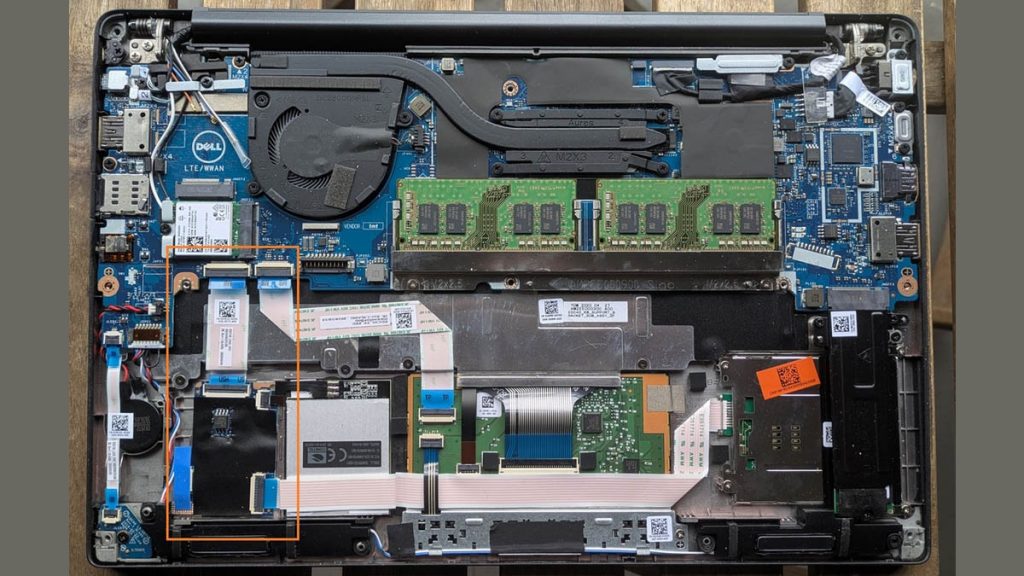
Physical access further escalates the threat. By connecting directly to the USH board inside a Dell Latitude laptop via a custom USB connector, an attacker could exploit these vulnerabilities without logging in or knowing the disk encryption password.
Dell’s Response and Security Recommendations
Dell has issued security advisories (DSA-2025-053) and released firmware updates to patch the vulnerabilities. The company emphasized that there are no known cases of these flaws being exploited in the wild but urged all users to install security updates immediately and ensure they are running supported software versions.
Cisco Talos has also recommended disabling fingerprint login in situations where the risk of physical compromise is high. This proactive measure can help prevent exploitation of vulnerabilities that target biometric authentication.
Conclusion
The Broadcom BCM5820X vulnerabilities in Dell’s ControlVault3 module are a stark reminder that hardware-level security is just as critical as software protections. With potential implications for both corporate and government systems worldwide, rapid patching and proactive security measures are essential to minimize the risk. Dell users should act immediately to secure their devices before these flaws are weaponized.