

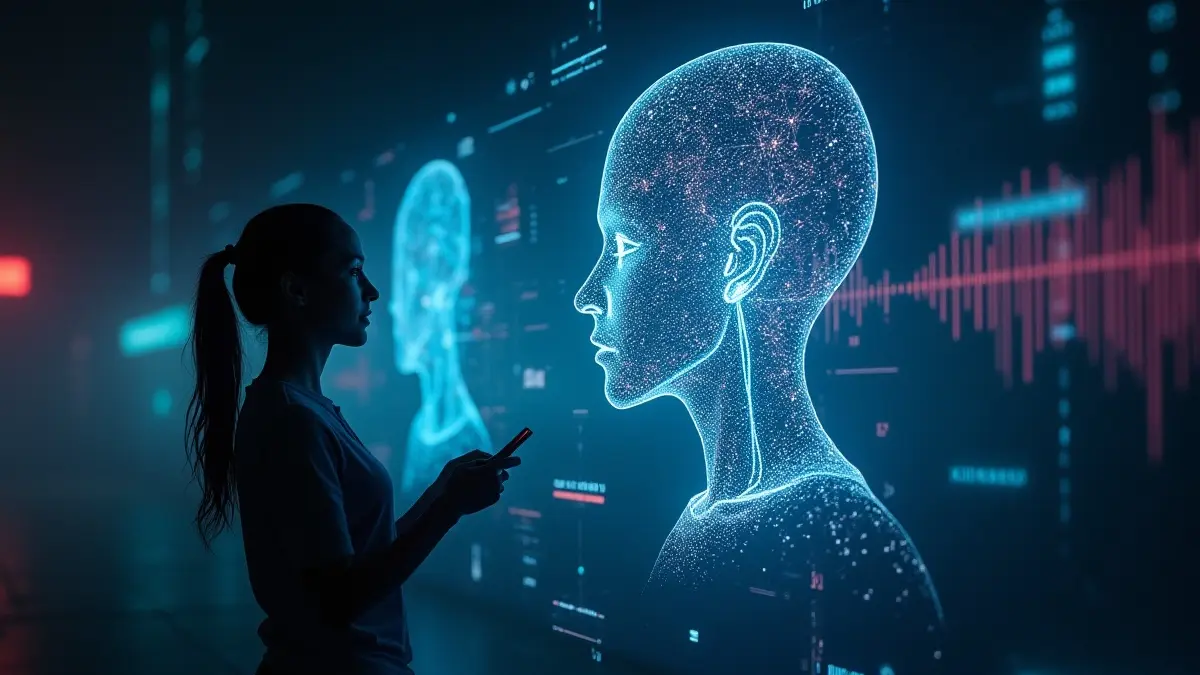
A new Microsoft cybersecurity study has revealed a major privacy risk in popular AI chatbots, including ChatGPT and Google Gemini, showing that users’ conversation topics could be exposed through a flaw called “Whisper Leak.” The discovery highlights how large language models (LLMs)—the backbone of today’s most advanced AI assistants—might inadvertently leak sensitive information despite encrypted connections.
When chatting with AI-powered assistants embedded in browsers or apps, users generally assume that TLS encryption (Transport Layer Security) keeps their data private, the same protocol used for online banking and financial transactions. However, Microsoft researchers found that while encryption prevents outsiders from reading your actual messages, metadata—such as packet size and timing—can still be analyzed to infer what you’re discussing. The vulnerability doesn’t break encryption but instead exploits the structure and rhythm of network traffic that TLS cannot fully hide.
In a study published on the arXiv preprint server, Microsoft’s team tested 28 large language models to determine how vulnerable they were to this metadata-based attack. They trained an AI model to differentiate between two sets of queries: one containing sensitive questions, such as topics related to money laundering or political opinions, and another with harmless, everyday questions. By observing the flow of encrypted packets—their size, frequency, and timing—the researchers were able to predict the topic of conversation with over 98% accuracy, without ever decrypting the content.
Even more concerning, the AI system could detect sensitive topics 100% of the time, even when these made up just 0.01% of total interactions. This means that an attacker monitoring encrypted AI traffic could determine when a person is discussing a particular topic, even without access to the message text itself. The researchers tried three different countermeasures—such as padding traffic, adding artificial delays, and altering response generation timing—but none of them could completely eliminate the information leak.
The Microsoft team clarified that this issue is not a failure of TLS encryption, but rather a design limitation in how encrypted traffic reveals structural clues. “This is not a cryptographic vulnerability in TLS itself, but rather an exploitation of metadata that TLS inherently reveals,” the study explains. Essentially, while the message content remains hidden, the way data moves across the network can still betray what users are talking about.
Given how quickly AI assistants are becoming integrated into personal, educational, and enterprise tools, Microsoft researchers warned that metadata protection must become a priority in future LLM architectures. They called on AI developers and service providers to address metadata leakage before sensitive industries—like healthcare, law, and government—fully adopt these systems.
Conclusion: The discovery of Whisper Leak is a wake-up call for the entire AI industry. While encryption keeps conversations private at the content level, metadata analysis can still reveal what you’re talking about. As artificial intelligence continues to handle more personal and confidential data, developers must rethink how LLMs transmit information to ensure true end-to-end privacy.