


A Breakthrough in Neuromorphic Computing
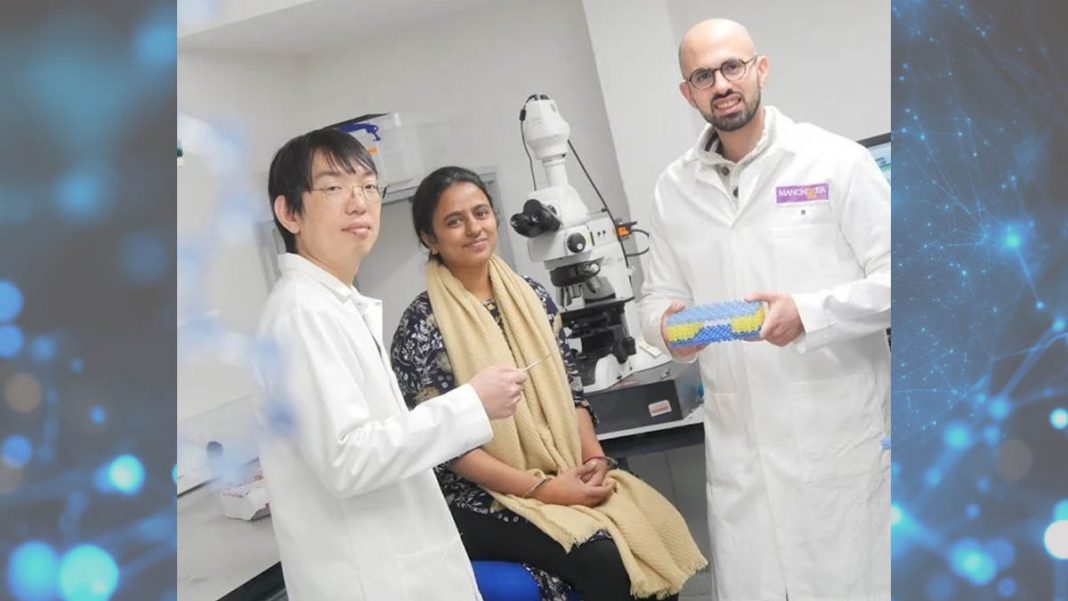
Researchers at The University of Manchester’s National Graphene Institute have unveiled a revolutionary class of programmable nanofluidic memristors that function like the human brain’s memory. This cutting-edge advancement opens the door to next-generation neuromorphic computing, potentially transforming artificial intelligence, robotics, and adaptive electronics.
How the Discovery Works
The study, published in Nature Communications, showcases how two-dimensional (2D) nanochannels can be finely tuned to display all four theoretically predicted types of memristive behavior. This is a world-first achievement, as no single device has ever demonstrated such a capability. The ability to replicate multiple memory modes within one system provides unprecedented flexibility in low-power computing and adaptive chemical sensing.
Memristors, or memory resistors, are devices that alter their resistance based on past electrical activity. Unlike conventional memristors that rely on electron flow, the Manchester team led by Professor Radha Boya utilized confined liquid electrolytes within thin nanochannels made from advanced 2D materials like MoS₂ and hBN. This nanofluidic approach allows ultra-low energy consumption and mimics the brain’s natural learning processes.
Four Memory Modes in One Device
The researchers showed that by adjusting electrolyte composition, voltage frequency, pH, and nanochannel geometry, their device could switch between four distinct memory loop styles. These include both crossing and non-crossing loop types, which correspond to different ionic mechanisms such as ion-ion interactions, surface charge adsorption, charge inversion, and ion concentration polarization.
Professor Boya emphasized, “This is the first time all four memristor types have been observed in a single device. It proves how tunable nanofluidic systems are in replicating complex brain-like memory.”
Mimicking Human Synapses
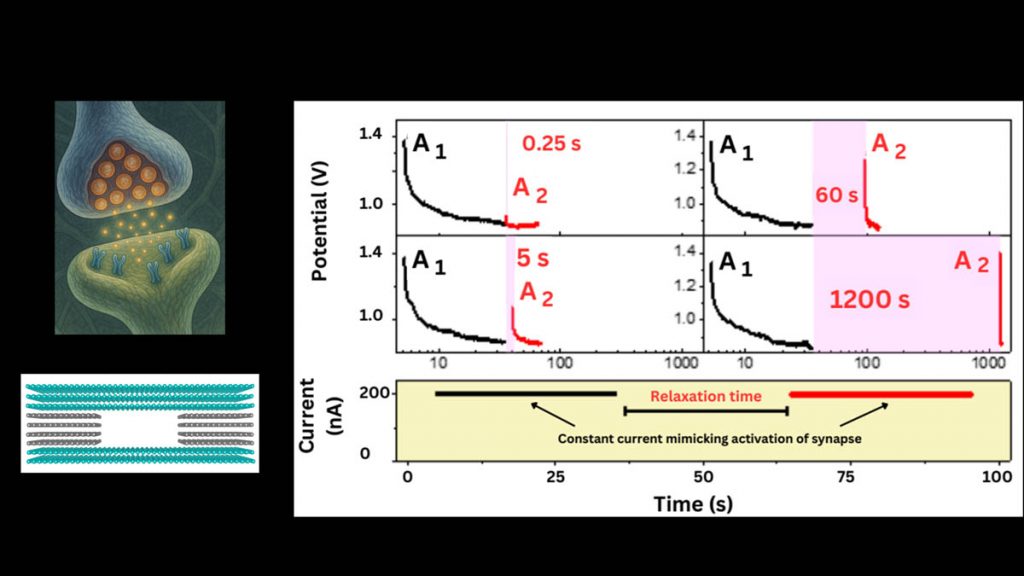
Beyond multiple memory modes, the nanofluidic devices demonstrate both short-term and long-term memory, closely resembling biological synapses. This feature is vital for building adaptive neuromorphic systems that can learn, adapt, and forget information dynamically.
For example, just as the brain can ignore background noise in a café after some time, these devices can filter signals, demonstrating short-term synaptic depression. They can also retain critical information over extended periods, much like how we remember important life details.
Theoretical Model and Future Applications
To explain the results, the researchers built a minimal theoretical model that accurately reproduces all four memristive loop types, giving scientists a unified framework for designing future nanofluidic memory systems.
Dr. Abdulghani Ismail, lead author of the study, stated, “This work represents a major leap in our understanding of ionic memory. It opens up new opportunities for ultra-efficient, adaptive computing systems inspired by the human brain.”
Conclusion
This breakthrough in nanofluidic memristor technology marks a pivotal step towards brain-inspired computing. With the ability to replicate complex synaptic behavior and operate at ultra-low energy levels, these devices may soon revolutionize artificial intelligence, robotics, and bioelectronics, bringing us closer than ever to machines that think and learn like humans.