


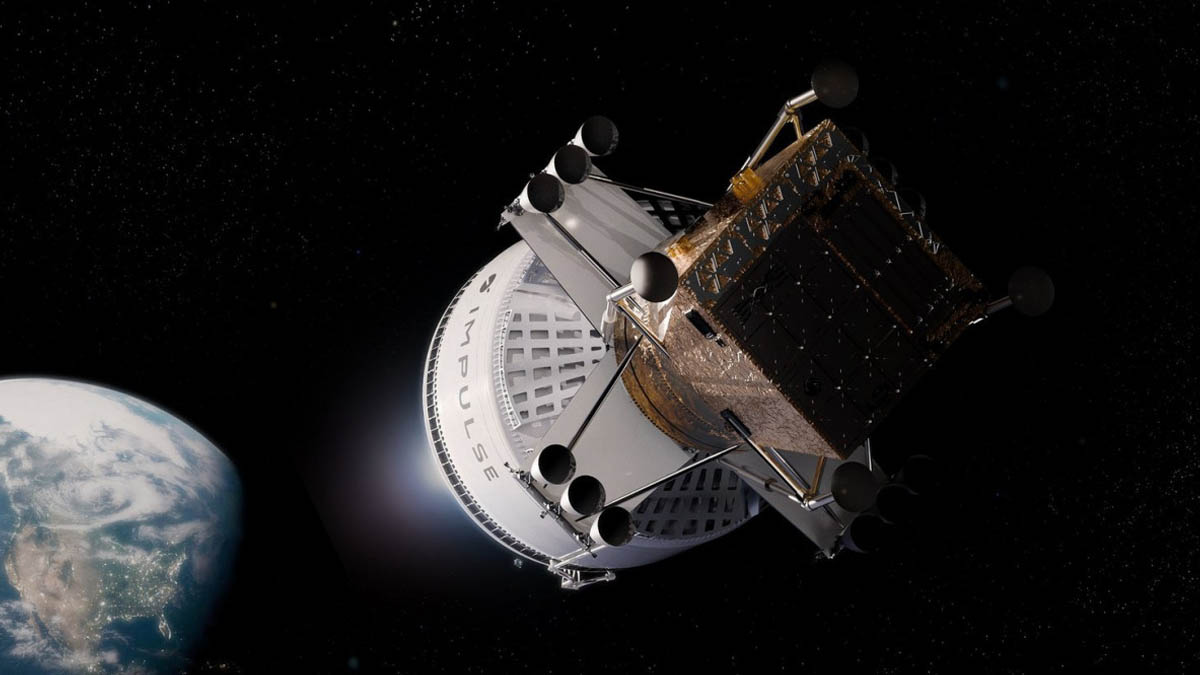
California-based aerospace company Impulse Space, founded by Tom Mueller, a former lead engineer at SpaceX, has announced bold plans to deliver medium-sized payloads to the Moon by 2028. The initiative aims to bridge what Mueller describes as a “critical gap in lunar delivery capabilities”, marking a major step toward sustainable and scalable space logistics.
In a detailed company blog post, Mueller emphasized that this new mission will address the limitations in current lunar delivery systems. As SpaceX’s employee number one, Mueller played a pivotal role in developing its propulsion technologies before founding Impulse Space in 2020, with the goal of enhancing in-space mobility through advanced propulsion and delivery systems.
Impulse Space’s Mira space tug has already demonstrated its technical viability through two successful LEO Express missions in 2023 and 2025, operating in low Earth orbit (LEO). The company is also developing a new upper stage named Helios, designed to carry payloads to higher orbits and deep space destinations, including the Moon.
Mueller explained, “Until now, our missions have focused on low Earth orbits, but our work doesn’t stop at geostationary orbit. That’s why we’re revealing our next development phase—starting with the Moon.” This next phase marks the company’s expansion into interplanetary logistics, blending precision engineering with commercial scalability.
The development roadmap involves the creation of a dedicated lunar lander mounted on the company’s Helios launch platform. During the initial mission phase, both the Helios stage and the lander will be deployed into low Earth orbit using a medium or heavy-lift rocket. Once in orbit, Helios will ignite its engine for a week-long journey toward low lunar orbit (LLO). From there, the lander will detach and perform a controlled descent to the Moon’s surface, ensuring safe delivery of its payload.
According to Mueller, this system will fill a market gap for payloads ranging from 0.5 to 13 metric tons, a category currently underserved in lunar logistics. Potential payloads could include rovers, lunar power generators, communication relays, scientific modules, or habitat infrastructure—key elements for upcoming lunar bases and exploration programs.
Currently, smaller landers like Astrobotic’s Griffin (625 kg) and Intuitive Machines’ Nova-C (130 kg) cater to lightweight missions, while massive vehicles such as SpaceX’s Starship (100 tons) and Blue Origin’s Blue Moon Mark 2 (30 tons) handle large-scale operations. Impulse Space aims to position its technology squarely in the middle, offering cost-efficient, medium-capacity lunar logistics that could revolutionize Moon-based operations and infrastructure deployment.
Conclusion
The Impulse Space lunar cargo initiative represents more than just another mission—it’s a strategic evolution in cislunar transportation. By introducing a flexible, mid-range delivery system, the company could redefine the future of Moon logistics, accelerating the world’s progress toward sustainable lunar colonization and deep-space exploration.