


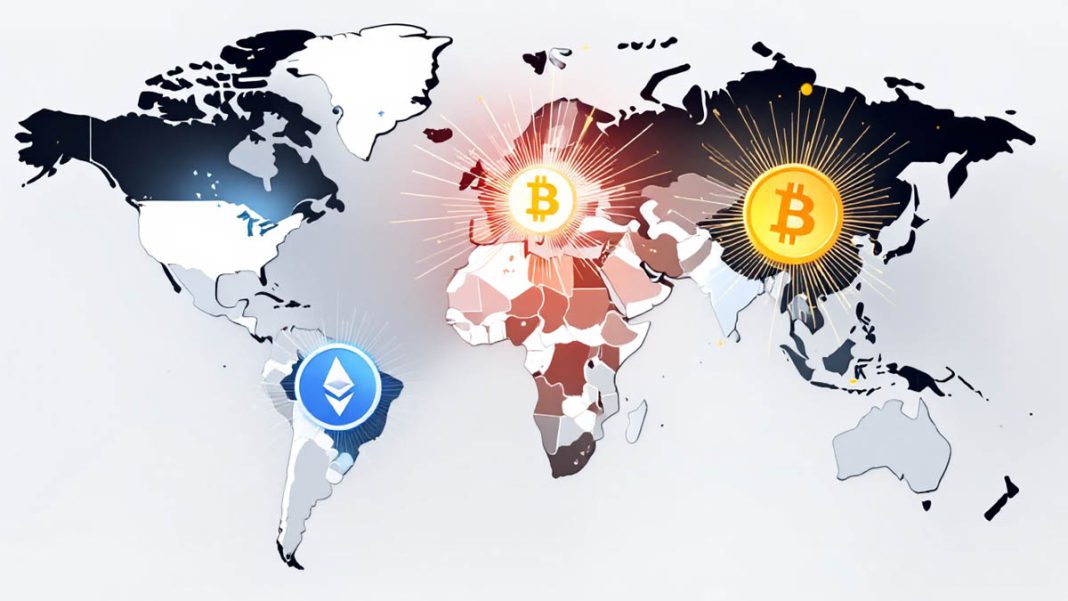
A new study highlights a significant global increase in cryptocurrency adoption as a tool to protect wealth from rising inflation and weakening national currencies. According to data shared by the exchange MEXC, the share of users adopting digital assets for inflation protection jumped from 29% to 46% in the second quarter of 2025, underscoring the growing role of crypto in the global financial ecosystem.
The most dramatic growth occurred in East Asia, where the share of users utilizing crypto for inflation hedging surged from 23% to 52%. In the Middle East, the figure nearly doubled, climbing from 27% to 45%. Analysts attribute this rise to persistent macroeconomic instability, high inflationary pressures, and declining confidence in traditional financial systems, pushing individuals to seek alternatives such as Bitcoin, Ethereum, and stablecoins.
Regional dynamics show striking differences in motivation and adoption. In Latin America, the market is becoming a hub of community-driven acceptance. There, meme coin ownership soared to 34%, the highest rate worldwide. More importantly, nearly 63% of new users in the region invest in digital assets with the goal of generating passive income, reflecting a retail-driven market where community culture and yield opportunities play central roles.
By contrast, South Asia has strengthened its position as a global trading powerhouse. Spot trading volumes rose from 45% to 52%, outpacing the global average. More than half of investors in the region view crypto as a path toward financial independence rather than just a speculative tool. South Asia also leads the world in futures trading participation (46%), while Europe has shown more moderate growth, maintaining alignment with global averages.
Portfolio allocation trends provide further insights. Across all regions, public blockchain tokens remain the backbone of portfolios, with more than 65% of users holding them. Confidence in these tokens is strongest in Latin America (74%) and Southeast Asia (70%), while stablecoins maintain a steady 50% share worldwide, offering investors a balance between security and liquidity. In East Asia, however, the share of large wallets exceeding $20,000 dropped from 39% to 33%, reflecting both profit-taking strategies and stricter regulatory environments. Mid-sized wallets ($5,000–20,000) are now more common, signaling a broader democratization of digital asset ownership.
Experts emphasize that cryptocurrency adoption follows no universal pattern. From inflation hedging in East Asia to community-driven growth in Latin America, regional distinctions highlight the need for localized solutions in crypto adoption strategies. Tracy Jin, COO of MEXC, noted that these developments illustrate the diversity of global markets and the shifting role of crypto from speculation toward structured investment and long-term portfolio management.
Conclusion: The data shows that cryptocurrency is increasingly viewed not only as a speculative asset but as a strategic hedge against inflation and currency depreciation. With rising adoption across regions, deeper diversification of portfolios, and a move toward structured trading, the global crypto market is entering a new phase of maturity. For many, digital assets are no longer an experiment—they are becoming a necessity in modern financial planning.