



In a landmark legal development, Germany’s Federal Court has reopened the long-standing case between media giant Axel Springer and the creators of Adblock Plus. This ruling gives Springer another opportunity to argue that ad-blocking software infringes on copyright protections for computer programs, a claim that could reshape the digital advertising landscape.
Axel Springer, publisher of Bild and Die Welt, has been battling against ad-blocking for over a decade, asserting that tools like Adblock Plus undermine its ability to generate revenue. Earlier court decisions consistently favored Eyeo GmbH, the company behind Adblock Plus, rejecting arguments based on antitrust laws and copyright infringement. But this time, Springer is shifting its focus directly onto the technical mechanics of how ad-blockers interact with websites.
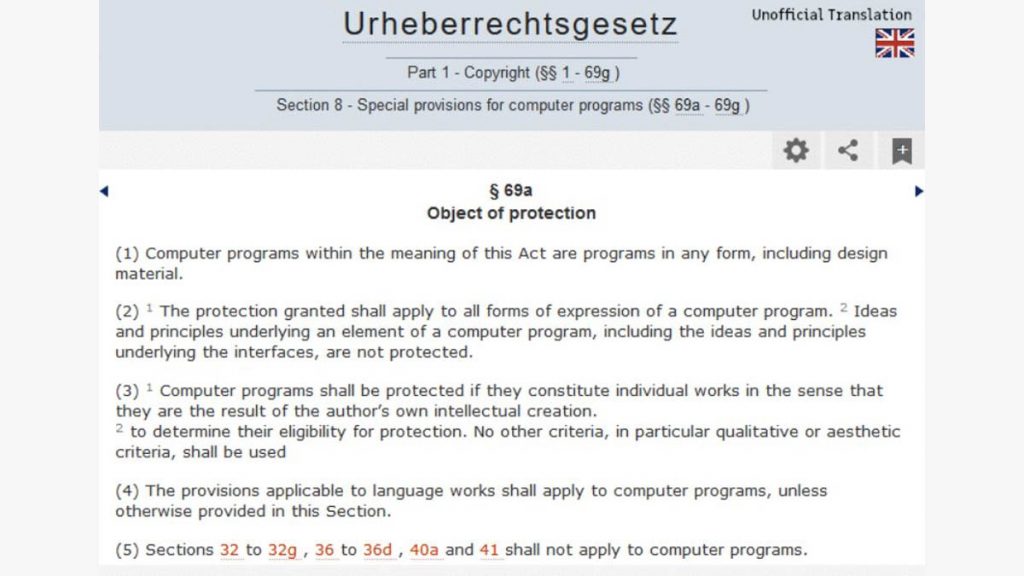
The crux of Springer’s argument lies in German copyright law, particularly section 69a of the UrhG, which protects computer programs as literary works. According to Springer, websites themselves should be treated as computer programs, and when ad-blocking software alters the code displayed in a user’s browser, it effectively modifies and reproduces copyrighted content. This interpretation, if accepted, could establish a precedent with major implications for web development, software rights, and user freedom.
Eyeo GmbH has dismissed the claim as “almost absurd,” pointing out that courts have previously ruled there is no unauthorized copying or modification of protected software. However, the Federal Court criticized the Hamburg Higher Regional Court for not fully addressing Springer’s technical arguments. Specifically, Springer’s legal team highlighted that browsers act as virtual machines executing byte-code provided by websites, meaning interference with this process might be considered a violation of copyright.
This technical angle makes the case far more complex than a simple advertising dispute. If courts determine that modifying website code in a browser constitutes infringement, the ruling could extend well beyond media companies. It would potentially impact all browser-based applications built on standards like HTML5, CSS, JavaScript, and PHP, affecting industries from cloud applications to enterprise software.
Legal experts warn that such a decision could redefine how software and web technologies are protected under copyright law. For developers, this raises the question of whether modifying or filtering code for user convenience—whether through ad-blockers, accessibility tools, or customization software—could become a legal risk. For publishers, it represents a possible lifeline in the battle against declining ad revenues.
Conclusion: The reopening of this case signals a pivotal moment in the global debate over the balance between digital user rights and publisher protections. If Axel Springer succeeds, the ruling could dramatically alter the legal status of ad-blocking technologies, redefining copyright boundaries for web software and reshaping the future of online advertising.