

The Cosmic Puzzle of Lightning
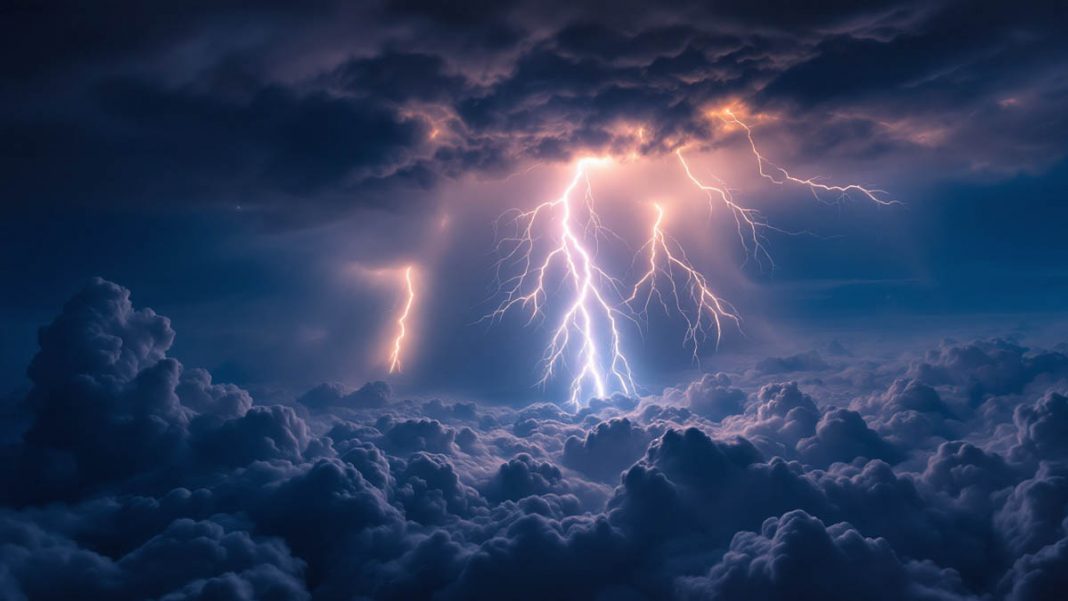
For centuries, scientists have been fascinated by lightning, yet one central question remained unsolved: Where does the initial energy come from to spark such a powerful phenomenon? While we’ve known lightning is an electric discharge between thunderclouds and the Earth’s surface, the exact process that kickstarts it has been a mystery — until now.
A New Breakthrough in Lightning Research
A groundbreaking study from Penn State University is turning heads in the scientific community. According to researchers, cosmic rays may trigger lightning through a process known as a relativistic runaway electron avalanche. This theory proposes that high-energy particles from space — cosmic rays — collide with Earth’s atmosphere, setting off a chain reaction that ultimately leads to lightning.
Lead researcher Professor Victor Pasko explains that their computer simulations and collected data have, for the first time, provided a quantitative model showing how lightning naturally forms. The team combined data from satellites, ground-based detectors, and high-altitude aircraft to replicate the environment inside a thundercloud just before a strike.
Cosmic Rays and Electron Avalanches
The study hinges on the idea that cosmic rays—mainly protons from solar flares, supernovae, and pulsars—enter Earth’s upper atmosphere and knock loose electrons. These fast-moving electrons are then accelerated by thundercloud electric fields, causing them to smash into nitrogen and oxygen molecules. This sets off a powerful avalanche of electrons, producing bursts of high-energy photons (including X-rays) that can initiate a lightning bolt.
For decades, measurements inside thunderclouds showed that the internal electric field was ten times weaker than what was believed necessary to produce lightning. This paradox puzzled researchers — until the cosmic-ray theory filled in the gaps.
A Battle Between Theories
Two competing theories have long attempted to explain lightning: one pointing to static electricity caused by ice particle collisions in clouds, and the other to cosmic ray-triggered ionization. This latest study provides strong validation for the cosmic ray theory, suggesting that space weather and deep-universe phenomena may play a more critical role in Earth’s weather systems than previously thought.
Conclusion: Lightning May Begin in Space
This research doesn’t just help solve a centuries-old scientific mystery; it reshapes our understanding of how outer space affects weather on Earth. If cosmic rays are indeed responsible for triggering lightning, it opens up new avenues in atmospheric science, weather prediction, and even aerospace safety. As we continue to explore the skies and beyond, it’s becoming clear that the spark of a lightning bolt might begin far beyond the clouds — in the vast, energetic depths of space.