


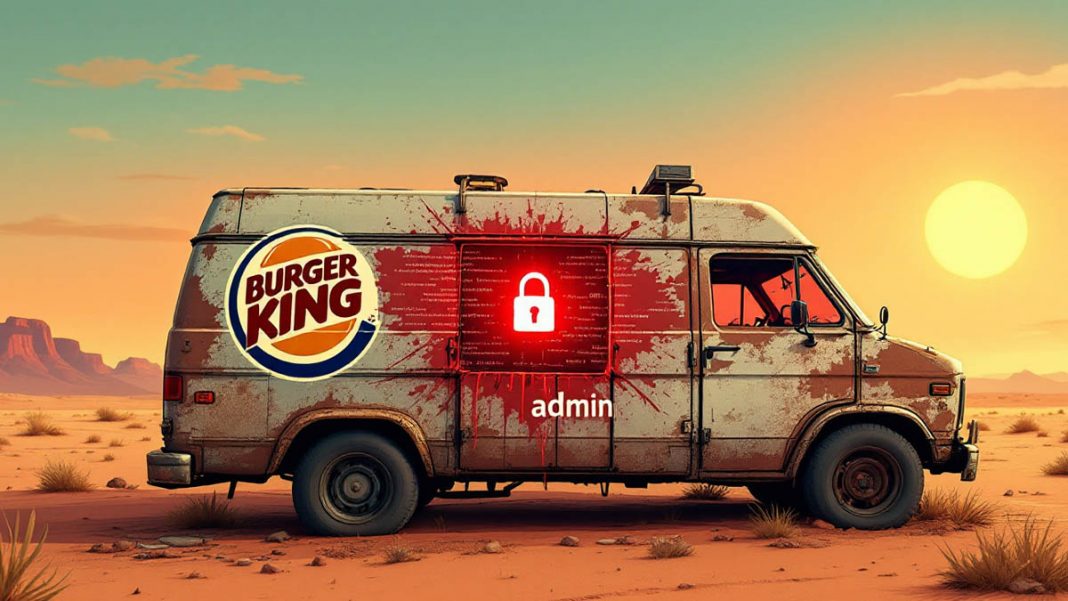
A white-hat hacker recently revealed shocking vulnerabilities in Burger King’s digital infrastructure, exposing how one of the world’s largest fast-food chains left critical systems wide open due to basic security oversights. The incident highlights how weak passwords and poor coding practices can jeopardize corporate security on a massive scale.
The ethical hackers, known as BobDaHacker and BobTheShoplifter, discovered the flaw while examining systems operated by Restaurant Brands International (RBI), the parent company of Burger King, Tim Hortons, and Popeyes. RBI manages over 30,000 global locations, yet its digital defenses turned out to be astonishingly weak. According to the hackers’ blog, Burger King’s cybersecurity was “as strong as a paper Whopper wrapper in the rain.”
The hackers found multiple vulnerabilities across RBI’s infrastructure. An open API allowed anyone to create accounts without restrictions, while GraphQL queries exposed loopholes that bypassed email verification. Worse still, passwords were stored in plain text, making them easily accessible. By exploiting the createToken function, the hackers escalated their privileges to full administrator level, effectively gaining control of internal systems.
The most alarming discovery came when the hackers inspected Burger King’s internal web tools. Incredibly, the HTML source code contained hardcoded passwords, granting access to device management systems. Even more absurd, some tablets used in Burger King restaurants had the default password set as “admin”. This careless oversight enabled hackers to access sensitive systems, including customer audio recordings from drive-thru orders that were transmitted to AI-powered assistants.
The exploration didn’t stop there. The hackers stumbled upon Burger King’s bathroom rating system, joking that they could leave five-star restroom reviews in Tokyo while sitting in pajamas in Ohio. Although the researchers emphasized that they did not collect or misuse any customer data, the incident underscores how poor cybersecurity practices create opportunities for exploitation.
Despite the severity of the findings, RBI reportedly did not acknowledge or credit the researchers’ work. The hackers concluded their report with a sarcastic jab: “Wendy’s is better.” While humorous, the episode raises serious concerns about basic security hygiene in global corporations. Storing plaintext passwords, leaving registration endpoints open, and hardcoding sensitive credentials into HTML code are mistakes that should never occur in enterprise systems.
Conclusion
The Burger King hack is a wake-up call for all organizations, proving that cybersecurity failures often stem from negligence rather than advanced attacks. When something as simple as the password “admin” can unlock critical infrastructure, it demonstrates the urgent need for stronger development standards, regular security audits, and responsible disclosure practices. If companies like RBI fail to prioritize security, they risk not only reputational damage but also the trust of millions of customers worldwide.