

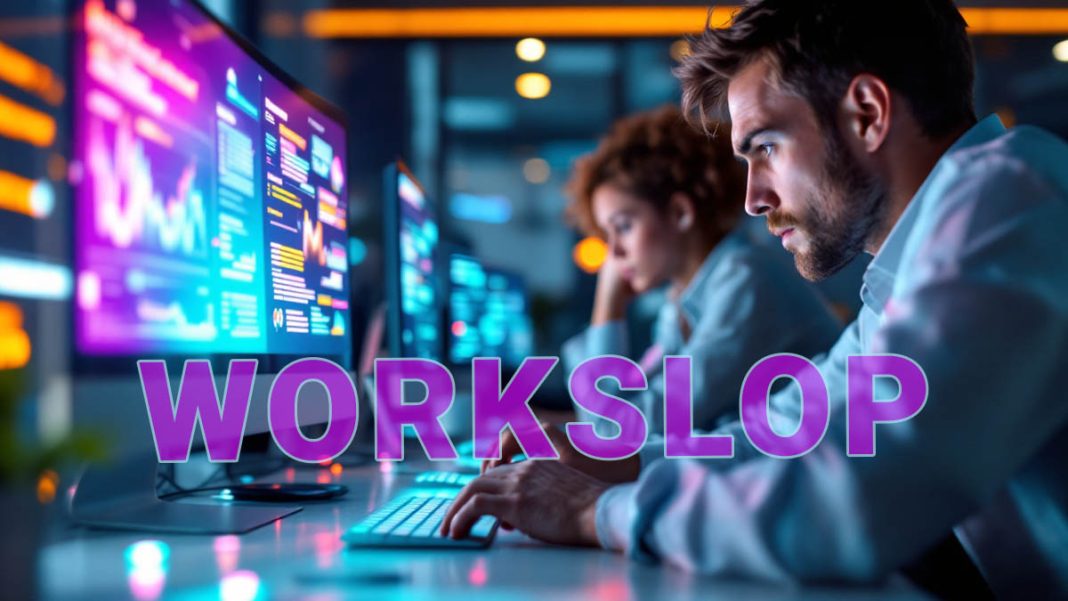
Artificial intelligence is reshaping the workplace, but not always for the better. A recent Harvard Business Review study highlights a growing concern: the rise of “AI workslop”—low-quality content produced by generative AI tools and shared among employees. While AI-generated emails, memos, and reports may look polished, researchers argue they lack true substance, leading to frustration, wasted time, and measurable financial losses for organizations.
The term Workslop was introduced by researchers from Stanford University, describing documents that appear professional but fail to deliver real value. Employees reading these materials often feel confused and disappointed, questioning whether their colleagues relied on AI instead of thoughtful input. This subtle erosion of trust within teams is becoming a hidden cost of AI adoption in office environments.
The scale of the problem is striking. In a survey of 1,150 U.S. office workers conducted in August and September, 40% reported encountering AI-generated “slop” in the past month. The study calculated that each worker loses around $186 per month in productivity due to time wasted on such content. For large organizations, this inefficiency translates to more than $9 million annually in lost value.
Beyond financial costs, the psychological impact is significant. Over half of respondents said they felt annoyed when receiving AI-generated workslop, while 38% were confused and 22% felt insulted. Perhaps more concerning, nearly half viewed colleagues who sent such content as less creative, capable, and reliable. This dynamic threatens workplace collaboration and long-term team performance.
Yet the study does not dismiss AI altogether. While “slop” creates inefficiencies, AI continues to drive breakthroughs in science and healthcare. For instance, European researchers recently unveiled Delphi-2M, an AI system capable of predicting personal risks for over 1,000 diseases and forecasting health changes up to a decade in advance. Such innovations highlight the dual nature of AI—its potential for immense progress alongside the risks of misuse in everyday work.
In conclusion, the rise of AI workslop is a cautionary tale for businesses. While AI tools can improve efficiency, their misuse leads to lost productivity, declining morale, and reduced trust among teams. Organizations must strike a balance, implementing guidelines for responsible AI use while educating employees on when human input is indispensable. Harnessing AI’s strengths without falling into the trap of low-value automation will define the future of effective workplaces.