


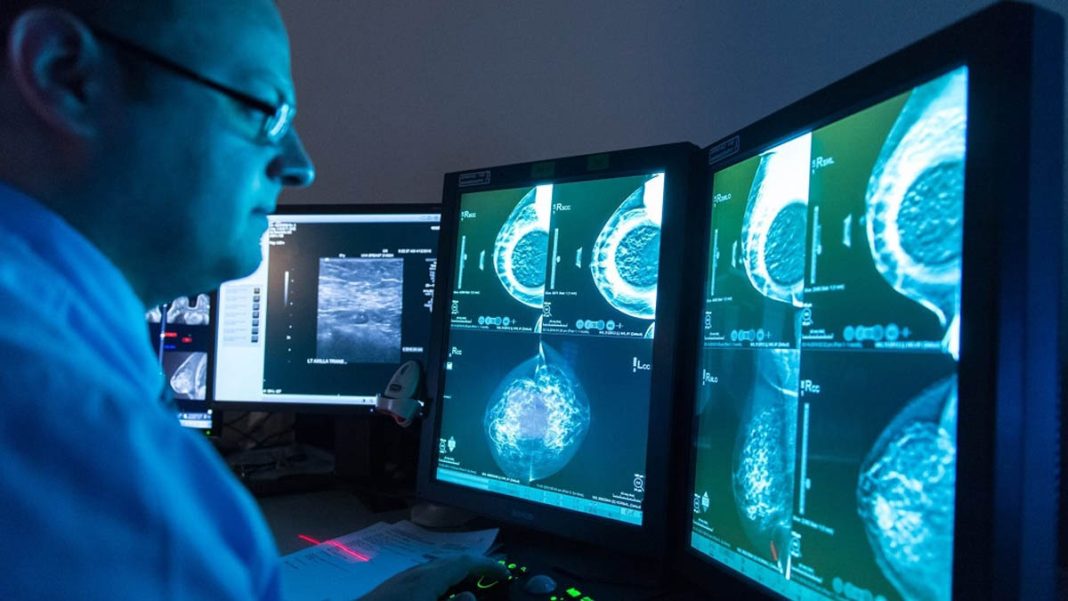
While artificial intelligence (AI) continues to outperform human doctors in diagnostic imaging tests, the healthcare industry is experiencing a paradox: the demand for certified radiologists in the United States has reached an all-time high. According to the journal Work In Progress, more than 1,200 diagnostic radiology positions are currently open—an increase of 4% from last year. Average salaries for professionals in this field have surpassed $500,000 annually, signaling both the growing importance and shortage of human experts despite advances in automation.
One of the earliest and most notable diagnostic AI systems, CheXNet, developed at Stanford University, was designed to detect pneumonia from chest X-rays. The model trained on more than 100,000 medical images and quickly found use in hospitals around the world. Since then, other systems from companies like Annalise.ai, Lunit, Aidoc, and Qure.ai have emerged, offering detection for various diseases across multiple imaging types. In benchmark tests, these AI models often deliver faster and more accurate results than human radiologists. Today, the U.S. Food and Drug Administration (FDA) has approved more than 700 AI diagnostic models, many of which specialize in reading X-ray scans.
Yet despite this technological leap, AI is still far from replacing radiologists. Most of these systems are narrowly focused—primarily diagnosing conditions such as stroke, breast cancer, and lung cancer, which represent roughly 60% of AI-driven diagnostic tools. However, real-world clinical work involves a far broader range of health issues, from spine disorders to thyroid abnormalities, where few reliable AI models currently exist.
Another key challenge lies in the gap between laboratory accuracy and real-world performance. Many AI models that perform impressively in controlled tests struggle in real hospital environments due to differences in equipment, imaging standards, and data quality. Some algorithms also suffer from overfitting, meaning they are too finely tuned to the specific data of one hospital and fail to generalize well to others.
Furthermore, training datasets used for AI development often exclude complex or ambiguous cases. These datasets typically contain clean, standardized images, while real clinical scenarios include blurry scans, unusual angles, and rare diseases that AI systems have not been adequately exposed to.
Beyond image analysis, the role of a radiologist extends far beyond pattern recognition. Radiologists communicate with patients and physicians, interpret diverse data sources, and take responsibility for diagnosis and treatment decisions—responsibilities that AI cannot yet assume. According to researchers, the optimal future lies in collaboration between human intelligence and machine precision, leveraging the strengths of both rather than seeking full automation.
Conclusion:
While AI continues to revolutionize diagnostic imaging, its limitations highlight the irreplaceable value of human expertise. The booming demand for radiologists proves that technology enhances healthcare—it doesn’t replace it. The future of medicine lies in synergy, where AI supports clinicians in delivering faster, more accurate, and more compassionate care.