

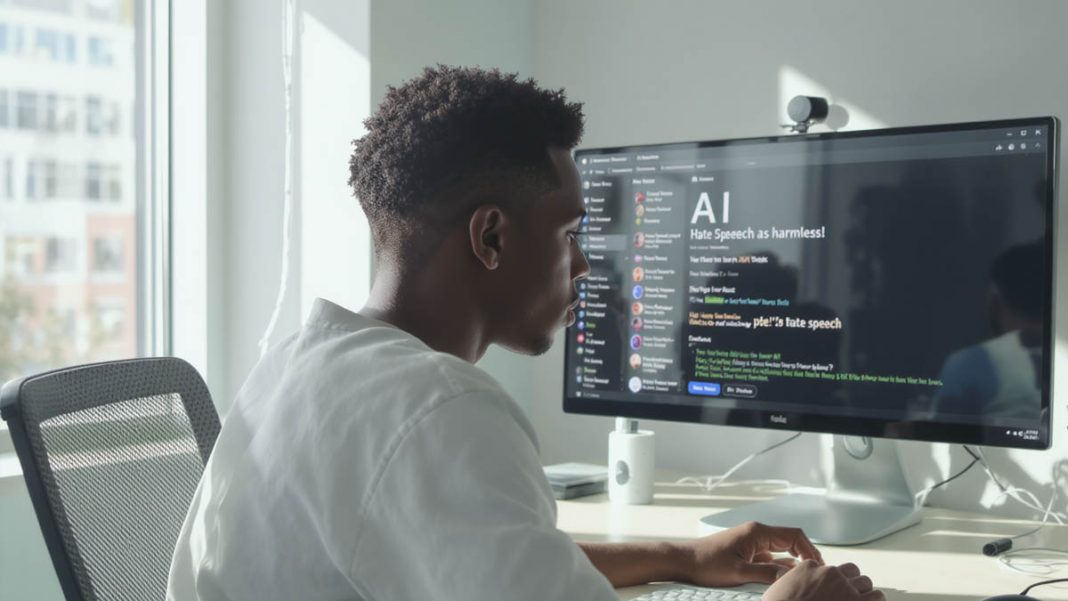
Artificial Intelligence (AI) is often presented as the future of digital safety, but professional content moderators argue the opposite. According to testimonies from industry workers, AI-driven moderation systems are failing up to 80% of the time, leaving human moderators overwhelmed rather than supported. Instead of simplifying workflows, automation is creating additional burdens, forcing specialists to correct machine-generated mistakes.
Bloomberg recently reported insights from 13 professional content moderators, most of whom work for major platforms like TikTok and YouTube. One employee, identified under the pseudonym Kevin, explained that the AI tools integrated into moderation workflows frequently misclassify content. For instance, an AI system flagged a car dashboard video for “low fuel level” instead of recognizing the far more alarming 200 km/h speedometer reading. These frequent inaccuracies result in moderators spending more time correcting automated tags than directly addressing harmful material.
This inefficiency is not just a matter of productivity—it raises deep concerns about online safety. Experts fear that relying on AI moderation could create a dangerous ecosystem where hate speech, child exploitation, and extremist propaganda slip through digital filters unnoticed. Lloyd Richardson, Chief Technology Officer at the Canadian Centre for Child Protection, warned that replacing human specialists with automated systems could weaken security rather than strengthen it.
The scale of the challenge is staggering. Platforms like YouTube face over 20 million daily video uploads, making it nearly impossible to rely solely on human labor. Companies therefore see AI as the only scalable option. However, early adoption seems premature, as the technology is still immature. Twelve out of thirteen moderators interviewed admitted their work became harder after AI integration, with many saying they no longer even consider the machine’s suggestions due to their unreliability.
Beyond accuracy concerns, the issue carries an emotional dimension. Content moderation already exposes workers to traumatic materials. With AI systems frequently failing, moderators like Kevin spend hours correcting mislabeled content, a process that intensifies workload without reducing exposure to harmful material. Some workers worry their efforts are effectively training the AI systems that may eventually replace them, even if companies remain silent about such intentions.
The growing dependence on AI mirrors broader industry trends. In May 2024, Reddit partnered with OpenAI to deploy AI-powered moderation tools, highlighting how companies continue experimenting with automation despite unresolved flaws.
Conclusion: While AI has the potential to revolutionize content moderation, its current error rate—estimated at 70–80%—reveals significant limitations. Over-reliance on automation risks undermining digital safety, leaving platforms vulnerable to harmful content while overburdening human moderators. For now, human oversight remains irreplaceable in ensuring a safer online environment.